Zeniya Gohei Memorial Museum: The Edo-Era Entrepreneur Who Built a Fortune on the Sea
A Merchant Waiting in a Quiet Harbor Town
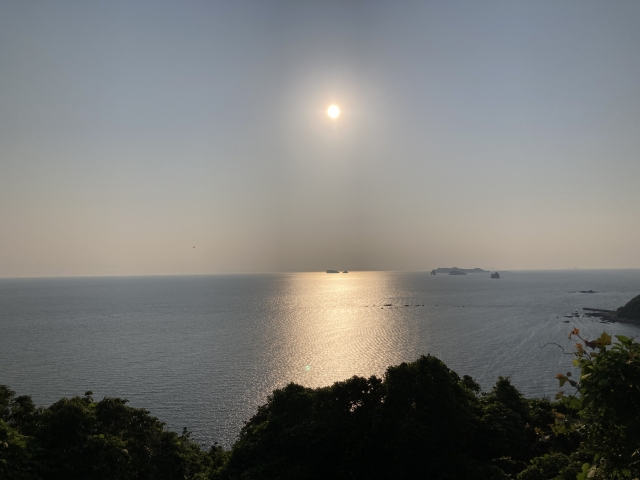
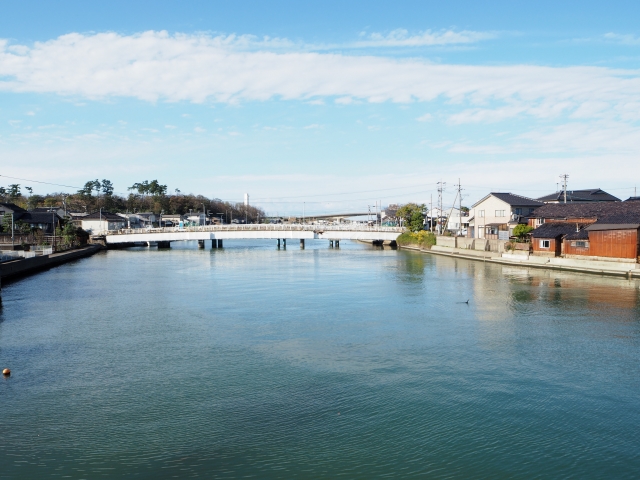
About fifteen minutes west of Kanazawa Station by car, the city loosens its grip. Kenroku-en and the lantern-lit teahouse streets fall behind, and the air begins to taste of salt. This is Kanaiwa, a quiet port town. In the Edo period it was called Miyanokoshi, the seaward gateway of the Kaga domain.
By the water stands a small museum devoted to one man: the Ishikawa Zeniya Gohei Memorial Museum. He was remembered as “the great merchant of the sea” and “the million-koku of the sea.”
To be honest, I knew nothing about him before I came. Of the several guidebooks I read before the trip, only one mentioned him, in a tiny entry tucked into the corner of a page. It did not look like a place many travelers go. Yet the name itself, Zeniya, “the House of Coin,” struck me as almost defiantly bold. What kind of merchant puts money itself in his name? That curiosity carried me a little way out of the city center.
By the time I left the exhibition rooms, I saw him differently. He had built a business from a single old ship, carried his trade across distant seas, and fell in the middle of his greatest dream. Zeniya Gohei was a courageous entrepreneur of Edo-period Japan.
What Was “Kaga Hyakumangoku”? The Richest Domain in Edo Japan
The Kaga domain, the stage for Zeniya Gohei’s story, was the wealthiest domain in Japan throughout the Edo period (1603–1868). A little background helps.
Edo-period Japan was ruled by the shogun in Edo (today’s Tokyo), but the country was divided into more than 250 semi-autonomous domains called han, each governed by a lord, or daimyo. A lord’s power was measured in koku. One koku was the amount of rice an adult ate in a year, about 180 liters. Since rice worked almost like currency, a domain’s koku rating was its economic weight.
Kaga, ruled by the Maeda family, was rated at about one million koku, which is what hyakumangoku means. That put it first among all lords below the shogun. Around 1664, the second-largest domain, Satsuma, stood at 730,000 koku. The phrase “Kaga Hyakumangoku” is still a point of pride in Kanazawa today.
The Maeda lords took care that their wealth would not look like a military threat to the shogun. Instead, they poured it into culture. They invited Japan’s finest artisans to Kanazawa, nurtured crafts such as Kaga yuzen silk dyeing and gold leaf, and championed the tea ceremony. Kenroku-en, one of Japan’s three great gardens, was their garden. Kanazawa’s refined, opulent sense of beauty grew from this.
But keeping up a million-koku style was expensive. By the later Edo period, the glittering domain was short of money. That is when a merchant appeared from the sea. If the Maeda were the million-koku of the land, Zeniya Gohei became known as “the million-koku of the sea.”
Who Was Zeniya Gohei? From a Pawned Old Ship to “the Million-Koku of the Sea”
Zeniya Gohei, known affectionately as “Zenigo,” was born in 1773 in Miyanokoshi, today’s Kanaiwa in Kanazawa. His family were money changers, which is where the shop name Zeniya, “House of Coin,” came from.
The turning point came at 39. He acquired a secondhand ship that had been forfeited at a pawnshop and stepped into shipping. Only in his mid-fifties did he commit fully to the kitamaebune trade, the merchant ships that sailed the Sea of Japan between Hokkaido and Osaka.
What followed was remarkable. He came to own more than 30 ships. From his head shop in Miyanokoshi, he set up branches and agents in 34 places across Japan, including Matsumae, Aomori, Niigata, Sakata, Nagasaki, Osaka and Edo. He became an official merchant to the Kaga domain and repeatedly raised funds for its struggling treasury, quietly propping up its finances.
Late in life, he began a project to reclaim Kahokugata, a large lagoon north of Kanazawa, and it changed his fate. In 1852, after people living around the lagoon died from eating poisoned fish, he was arrested and died in prison. Many accounts say the charge was false, a slander spread by those who opposed him.
Zeniya Gohei, an Entrepreneur of Edo Japan
Walking through the exhibits, one thought kept returning: this man was what we would now call a founder. Here are five reasons why.
1. He started small and grew big
His first vessel was not a new ship but a pawned old one. He tested the idea with what he had, and only after it worked did he build a fleet. It is the “start small” approach today’s startups talk about.
2. He did not let age stop him
He went all in on the kitamaebune trade in his fifties, in an era when a lifespan of fifty years was considered normal. He thought “from here,” not “too late.” That gave me more courage than anything else in the museum.
3. He built a network that linked the whole country
Kitamaebune were not simple freight carriers. Their owners bought cargo cheaply at one port and sold it dearly at another. With bases in 34 locations, Gohei built a system for gathering prices and information from every region. He was, in effect, running an Edo-period trading company that controlled both logistics and information.
4. He supported the domain and turned it into business strength
Kaga’s finances were strained by the cost of its million-koku status and by the Tenpo famine of the 1830s. The domain often ordered wealthy merchants to raise funds. Gohei worked with Okumura Teruzane, a senior councillor who ran the domain’s finances, and took charge of raising money for it.
What fascinates me is that he did not simply hand over cash. In return, he reportedly received a permanent license to sail freely to ports nationwide as a ship of the Kaga domain. He was also put in charge of managing the domain’s own merchant ships, and expanded his trade under the domain’s banner.
The domain got money; Gohei got credibility and reach. Today we might call it a large public-private partnership. Turning a donation into a deal that benefited both sides shows his business sense clearly.
5. He reinvested profits in new ventures
The Kahokugata reclamation in his final years was an ambitious plan to turn a lagoon into rice fields. Rather than hoarding his wealth, he used it to create new industry. He is said to have cared more about enriching the land and its people than about private gain.
This venture cost him his life. People who try new things meet resistance in every era. After his patron Okumura died, a rival reform faction took control of the domain, and Gohei’s position grew precarious. Some historians suggest the domain wanted to curb a merchant who had grown too powerful, and to use his confiscated fortune to patch its own finances. The wealth that had supported the domain was, in the end, taken by it. The reclamation was never finished, but the lagoon was finally drained by a national project in the 1960s, more than a century later.
Gohei was not the only one arrested. His third son, Yozo, along with other family members and shop employees, was imprisoned too. Some died in prison; some were crucified. The Zeniya house lost its fortune to confiscation, and its name was abolished.
In the Meiji era, storytellers told of Chikako (Chika), his granddaughter, who was said to have thrown herself into the Asano River praying for her imprisoned family’s release. The tale of “Chikako the devoted daughter” was even painted in woodblock prints. But it was a storytelling legend of filial devotion, and it has not been confirmed as historical fact. The real Chika is remembered as a woman who, like her grandfather, loved haiku.
Still, that such a story was born and passed down says much about how deep the family’s tragedy ran. What did Gohei think about, an old man of eighty in a prison cell? For the sake of his dream, the reclamation, his son, his chief clerk and his shop staff were being charged one after another. More than watching everything he had built collapse, I think what tormented him most was having dragged the people he loved down with him. After leaving the exhibits, I could not stop imagining it.
A side story: beyond the closed sea, rumors of smuggling
Any account of Gohei has to touch on one rumor: that he secretly traded with foreign countries while Japan was closed.
At the time, the shogunate limited foreign trade to a few official channels, such as Nagasaki. This policy is known as sakoku, the “closed country.” Trading with foreign ships without permission was called nukeni, smuggling, and was a serious crime.
Even so, many legends surround Gohei:
- He traded through the Ainu people on Sakhalin, and with Russians in the waters off Etorofu Island.
- He traveled as far as Hong Kong and Amoy himself, and dealt with American merchants.
- He owned land on Tasmania, in Australia. In the Meiji era, a newspaper reported that a stone marker reading “Territory of Zeniya Gohei of Kaga” had been seen there.
On Rebun Island in Hokkaido, a monument marking “the place where Zeniya Gohei traded” still stands. Yet no document has been found that directly proves any of this, and historians remain divided. After his death, Gohei was condemned as a villainous merchant who grew rich on smuggling. After the Meiji Restoration, the view reversed, and he came to be praised as a pioneer who tried to open trade with the world while Japan was closed.
I cannot say what is true. But it was in these slightly dark rumors that I felt his entrepreneurial nature most strongly. When he saw a great opportunity beyond the edge of the rules, he stepped toward it, knowing the danger. I pictured a challenger who dreamed of a world no one yet knew beyond the horizon, and raised his sails toward a rough sea. Through the mist of legend, the figure of such a man seems to rise into view. That so many rumors grew around him at all says how bold, and how far beyond convention, his business must have been.
Highlights of the Museum
The museum opened in 1997. One shared ticket covers two buildings: the Memorial Museum and Zenigo no Yakata, his relocated former residence. Allow 40 minutes to an hour.
A quarter-scale model of the Joho Maru
The first thing that catches the eye is a quarter-scale model of the Joho Maru, a kitamaebune. Built at Miyanokoshi in 1845, she was a 1,500-koku official ship of the Kaga domain. The lord himself came to see her, and she sailed the whole country flying the domain’s plum-blossom crest, a symbol of the Zeniya fleet at its height. Even at a quarter of her size, the model is large, and imagining her crossing the rough Sea of Japan quickens the pulse. Visitors can also try a simulated voyage.
The theater and the trade-route map
A short film in the theater traces his turbulent life. Watching it first makes the rest of the exhibition much richer. An interactive map shows how far the Zeniya trade network reached.
His diary and a ship’s chest
Gohei’s own diary, the Nennendome, is designated a cultural property of Ishikawa Prefecture. A ship’s chest bearing the family crest and other belongings evoke the life of a merchant at sea. In the free corner beside the reception desk, a folding screen depicting Miyanokoshi shows the bustle of the port town in his day.
Zenigo no Yakata: the house and storehouse
Nearby, Zenigo no Yakata recreates part of the original Zeniya residence and a three-story storehouse, moved here and rebuilt. After meeting the great businessman in the exhibits, you meet the man at home. Its opening hours and closing days differ slightly from the main museum, so check the details below.
What a Man Who Watched the Sea Leaves Us
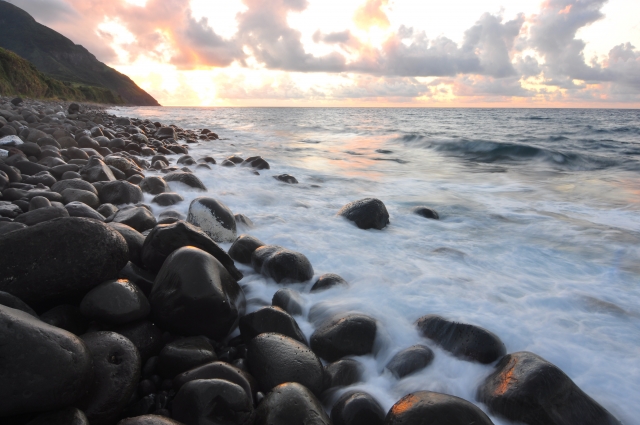
Step outside and walk toward Ono Port, and the sea wind brushes your cheek. Two hundred years ago, Gohei may have stood in this same wind, looking past it toward trade no one had yet imagined.
His life cannot be told only as a success story. He rose very high, and in the end he lost everything. What draws me to him is not the outcome but the way he kept rowing out toward new seas.
“It’s too late for me.” “What if I fail?” If thoughts like these are holding you back, this is the museum to visit. The story of a man who set out for open water in his fifties will quietly give you a push.
Practical Information and Access
The museum is open every day from May to November, which makes it easy to fit into a trip.
| Zeniya Gohei Memorial Museum | Zenigo no Yakata | |
|---|---|---|
| Address | 55 Kanaiwa-honmachi Ro, Kanazawa, Ishikawa | 85-1 Fushoji-machi San, Kanazawa, Ishikawa |
| Hours | 9:00–17:00 (last entry 16:30) | 10:00–17:00 (last entry 16:30) |
| Closed | Tuesdays from December to April (next day if Tuesday is a holiday); open daily May–November; Dec 29–Jan 3 | Same as the museum, plus closed in January and February (visits possible on request) |
| Admission (both buildings) | Adults ¥500, school students ¥350 (groups of 20+: ¥400 / ¥300) | Same ticket |
| Phone | +81-76-267-7744 | +81-76-267-2333 |
By bus: From the Korinbo or Musashigatsuji area, take a Hokutetsu bus bound for Kanaiwa or Ono. Get off at Nishi-Keisatsusho-mae (Zeniya Gohei Kinenkan-mae), then walk about 5 minutes.
By car: About 15 minutes from Kanazawa Station, or about 10 minutes from Kanazawa-nishi IC. Free parking for about 40 cars.
Visitors with a disability certificate, plus one companion, enter free. Please check the official website (in Japanese) for the latest information before you go.
Nearby
- Ono Minato Shrine: Next door to the museum, said to have been founded in 727. Noh performances are dedicated here every May.
- Ono Minato Ryokuchi Park: Right in front of the museum, a pleasant place to walk and let the story settle.
In Closing: Another “Million Koku” on Your Kanazawa Trip
Kanazawa is remembered as the castle town of Kaga’s million koku. Behind that splendor, there was also a “million koku of the sea,” a fortune built on the water.
- A “small start” from a single pawned ship
- A bold move made in his fifties, unbothered by age
- A national network of logistics and information across 34 bases
- A public-private partnership that turned support for the domain into reach
- Reinvestment in new ventures, and the price he paid for it
After Kenroku-en and the teahouse streets, give half a day to the sea. In the salt wind, the story of an Edo-era entrepreneur will leave a long, quiet resonance.