Walking the Nezu Museum Garden — An Urban Forest Where Asian Traditions Meet, Left by Nezu Kaichiro I
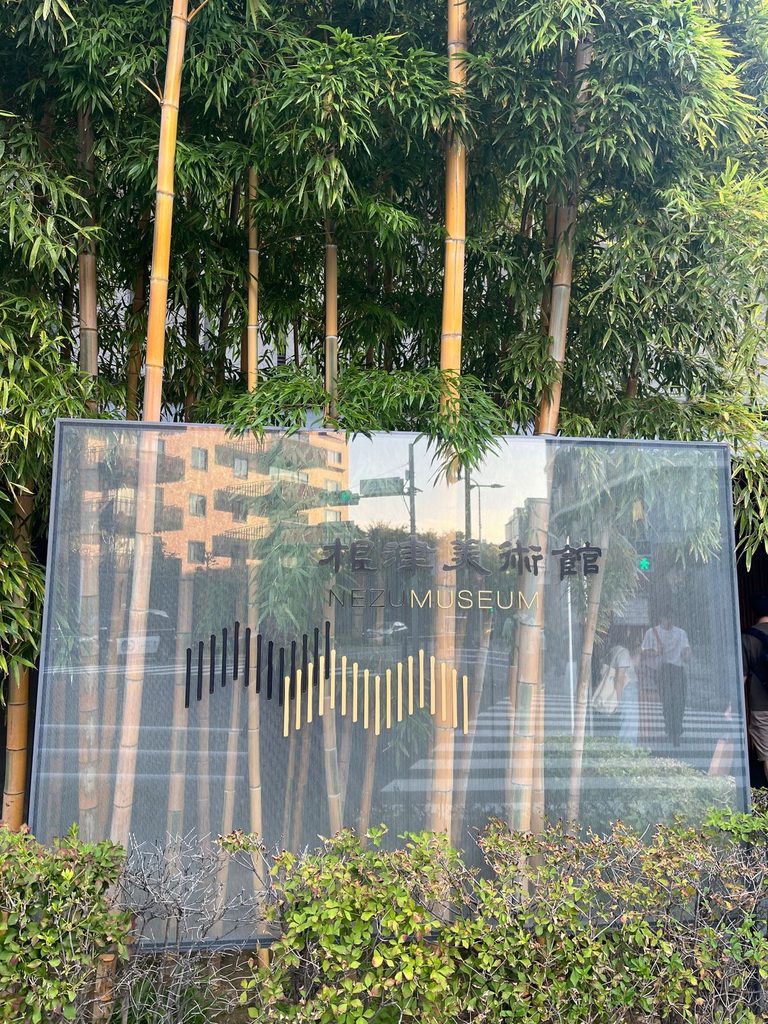
Walk east from Omotesando crossing, past the flagship boutiques of Miyuki-dori, for about eight minutes. The traffic noise fades, and behind a screen of green bamboo, the name appears: Nezu Bijutsukan (根津美術館), the Nezu Museum.
It holds the art one man gathered so that Japan’s treasures would not drift overseas. And behind the galleries lies a hillside garden where Japanese tea houses share the shade with stone figures from Korea and forms that recall India.
What a railway magnate set out to save
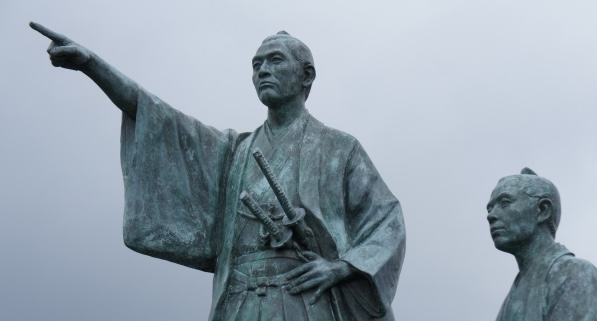
The museum began with Nezu Kaichiro I (初代 根津嘉一郎, 1860–1940). Born in Yamanashi, he became president of the Tobu Railway and one of the leading industrialists of the Meiji, Taisho and early Showa eras.
After the Meiji Restoration of 1868, Japan rushed to modernise. Old temple treasures, paintings and tea utensils fell out of favour, and many were sold to collectors in Europe and America. Nezu watched this with alarm. He collected widely to keep them in Japan: painting, calligraphy, Buddhist art, ceramics, lacquer, even ancient Chinese bronzes. In later life he practised the tea ceremony under the tea name Seizan (青山, “blue mountain”), and tea wares became a pillar of the collection.
He did not want to hide these works away. His wish was to enjoy them together with the public. He died in 1940, and his son, Nezu Kaichiro II, founded the museum foundation that year. The museum opened in 1941. During the war the collection was evacuated, and when air raids burned the family residence in 1945, the art survived.
Today the museum holds about 7,400 works of Japanese and East Asian art, including Ogata Korin’s Irises (燕子花図屏風), a National Treasure. Even the land is part of the story: Nezu bought this hilly plot in 1906 for his private estate.
A bamboo corridor into another world
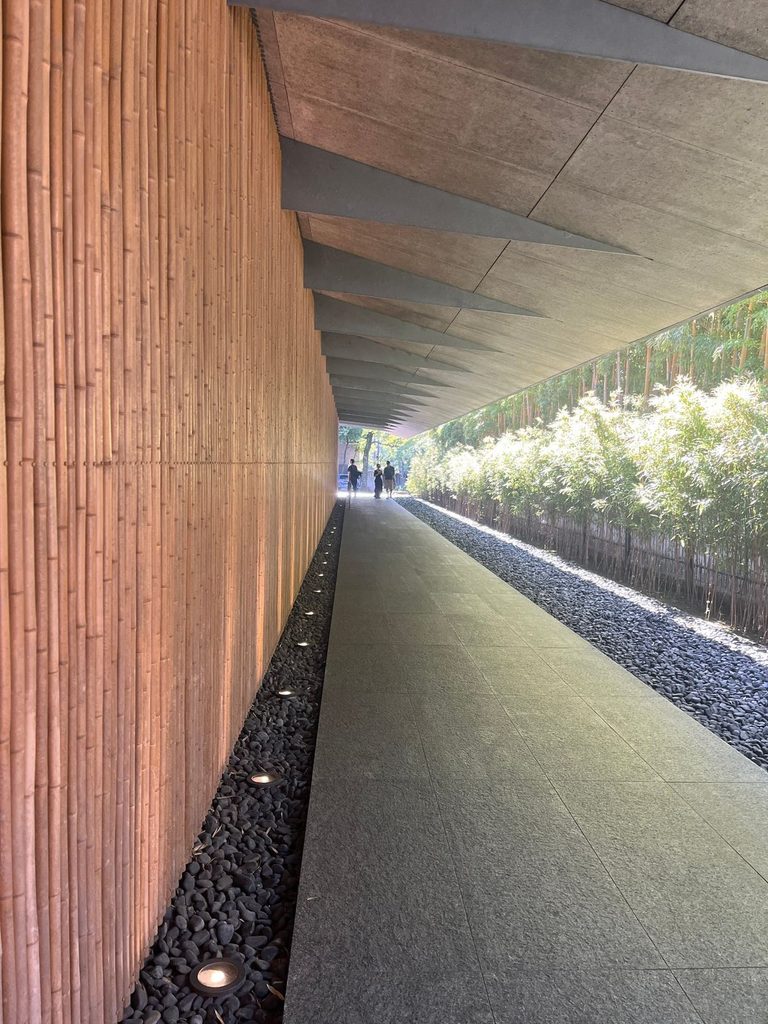
The present building, designed by architect Kengo Kuma, opened in 2009. The approach is a long, quiet corridor: bamboo fencing on one side, living bamboo and black pebbles on the other, and small lights set low along the path. By the time you reach the door, the city has slipped away.
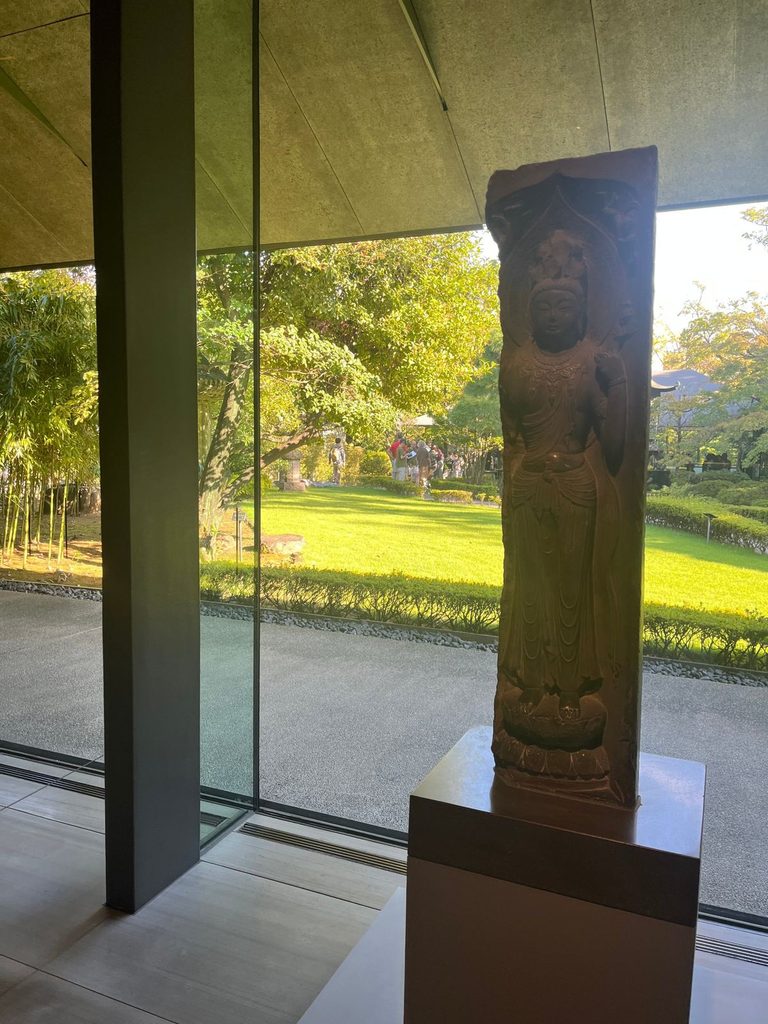
Inside, a wall of glass opens onto the garden. On the day I visited, a stone Buddhist figure stood by the window as part of the current exhibition. The works on show change with each exhibition, so what you meet here depends on when you come. Still, standing at this window, with art set against the green outside, you feel how the building and the garden were designed as one view.
A mountain valley in the middle of Tokyo
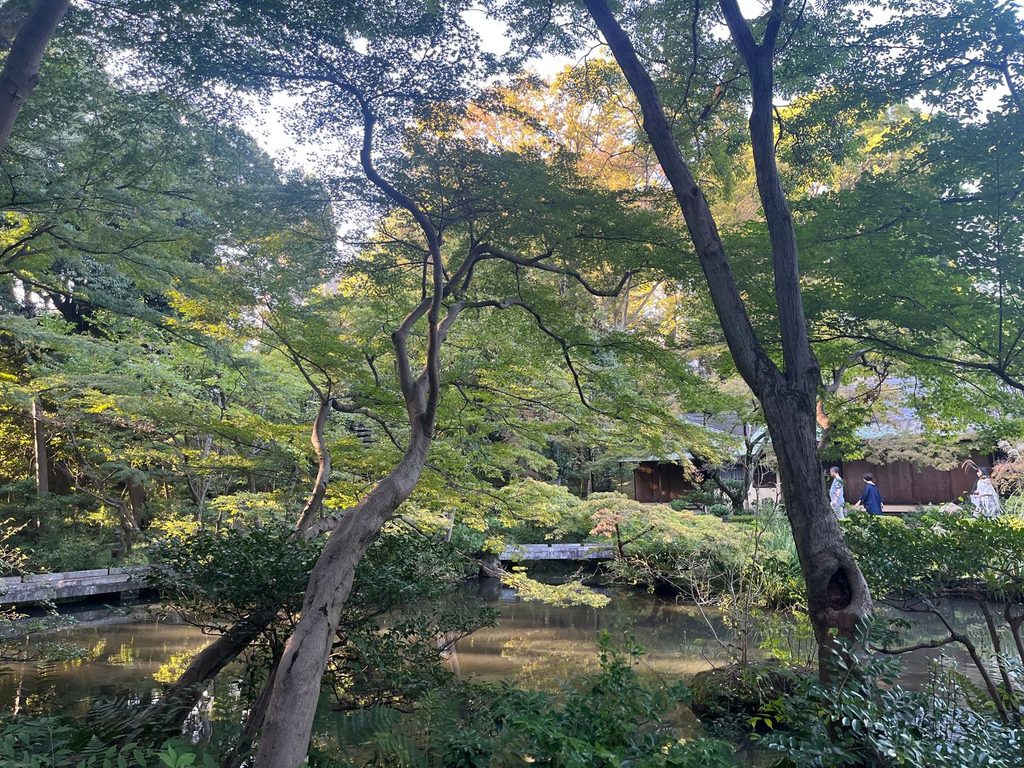
After the galleries, step out through the garden exit. Nezu chose this land for its rolling slopes and shaped it into a garden meant to feel like a deep mountain valley (shinzan yūkoku, 深山幽谷). In 1913 he even invited critics to judge it.
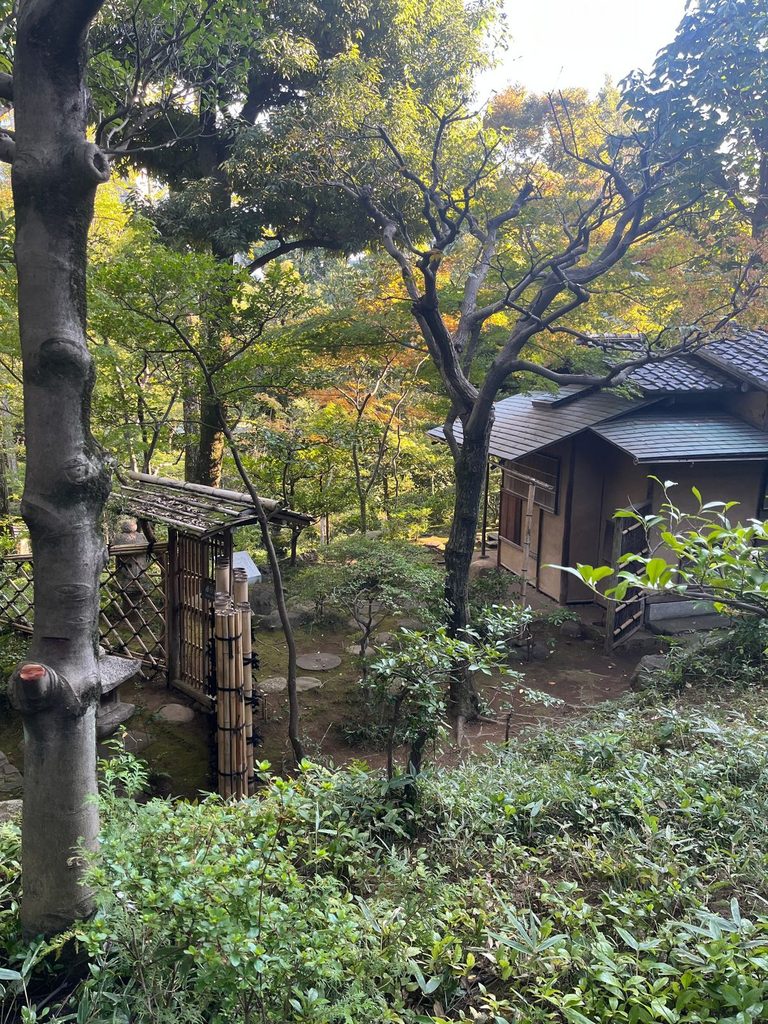
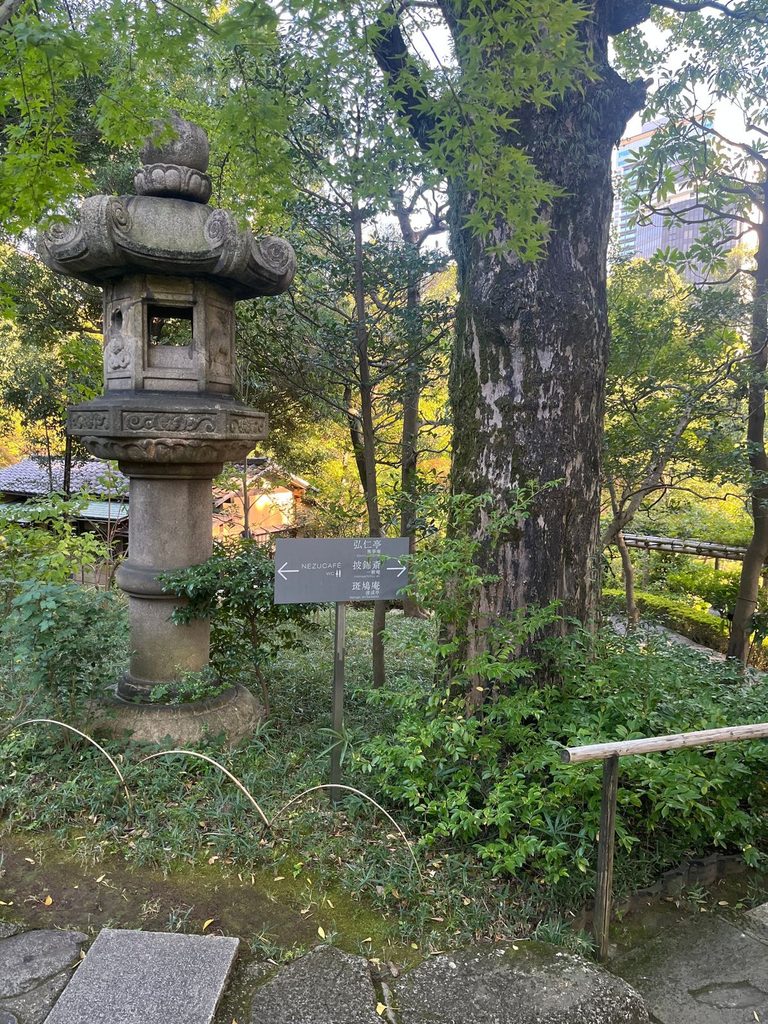
Stone paths lead down through maples to a pond, and tea houses appear between the trees. There are four tea-house buildings, among them Kohintei (弘仁亭), Hikinsai (披錦斎) and Ikaruga-an (斑鳩庵).
Korean and Indian echoes in a Japanese garden
What makes this garden unusual is that it is not a purely Japanese garden. Moss-covered stone lanterns and tea-house paths are classic Japan. Yet between them, stone figures from elsewhere in Asia keep appearing.
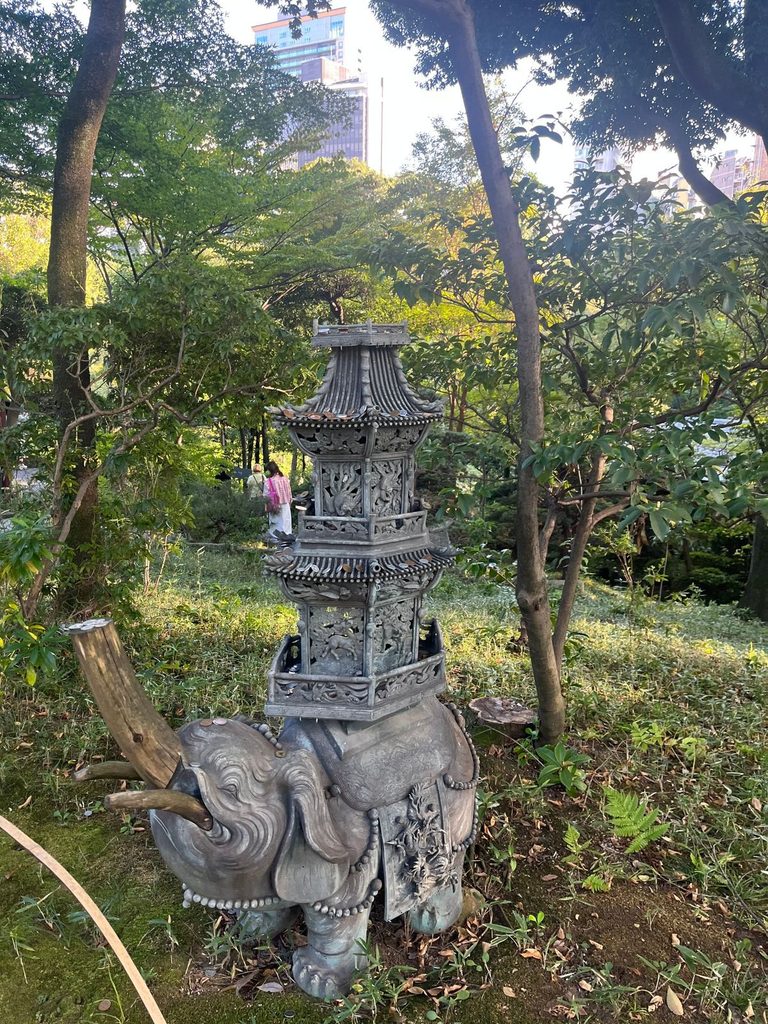
One is a tiered stone pagoda carried on the back of an elephant, a form rarely seen in Japanese gardens. In Buddhism, which began in India, the elephant is a sacred animal, and the carving recalls Indian stonework.
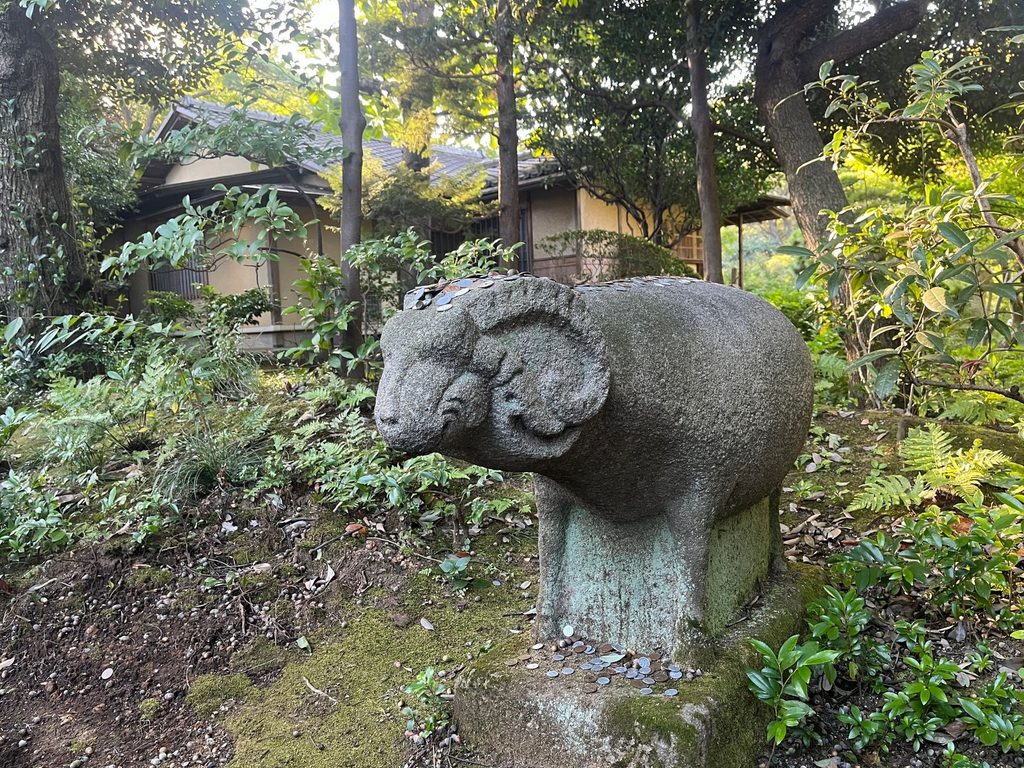
In the undergrowth stands a sturdy stone ram. On the Korean Peninsula, figures of people and animals were placed around the tombs of high-ranking families to guard them. The ram is one of the most typical.
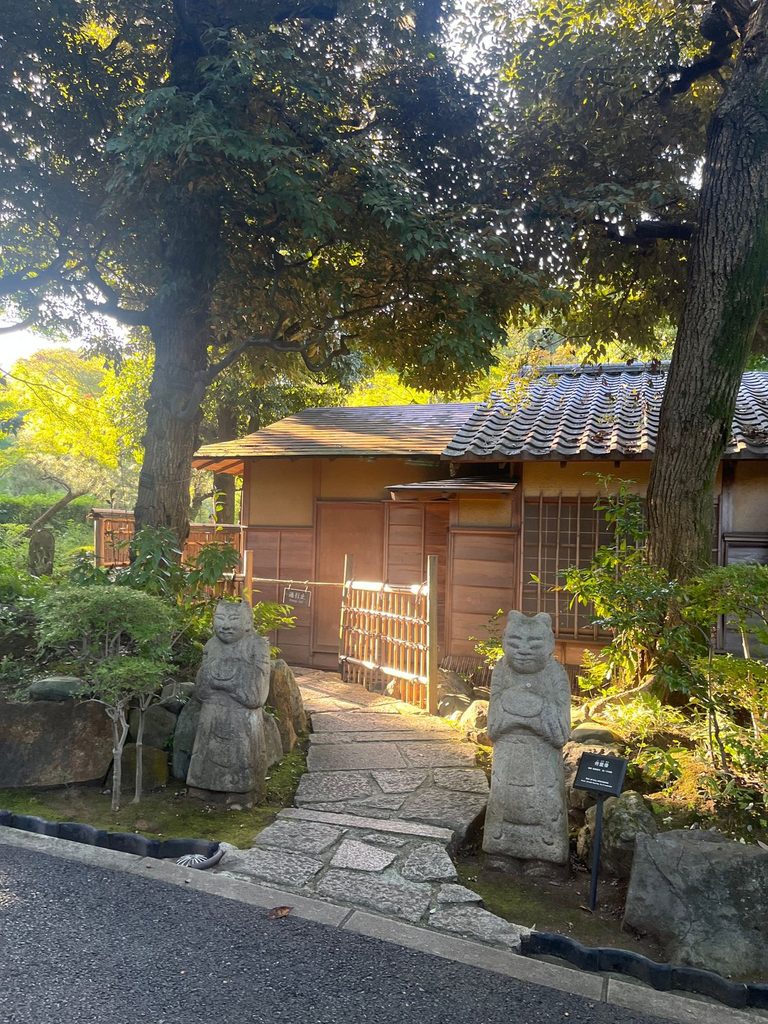
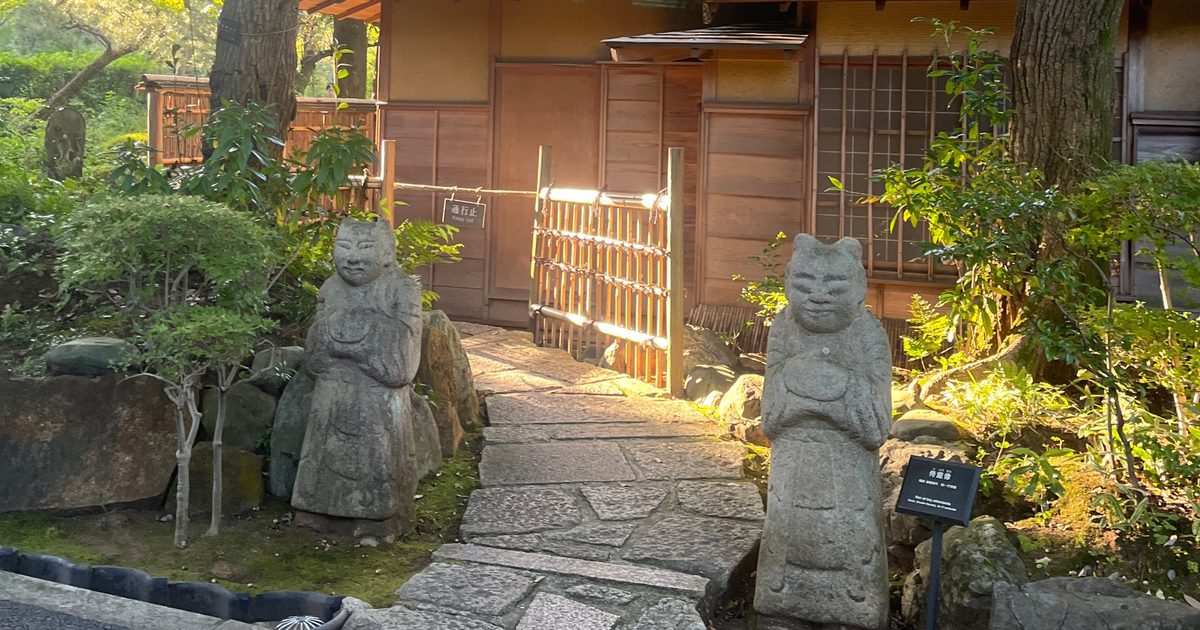
At the entrance to a tea house stand a pair of jidōzō (侍童像), boy attendants. The sign dates them to Korea’s Joseon dynasty, 16th–17th century. With hands folded and calm faces, they seem to welcome guests on their way to tea.
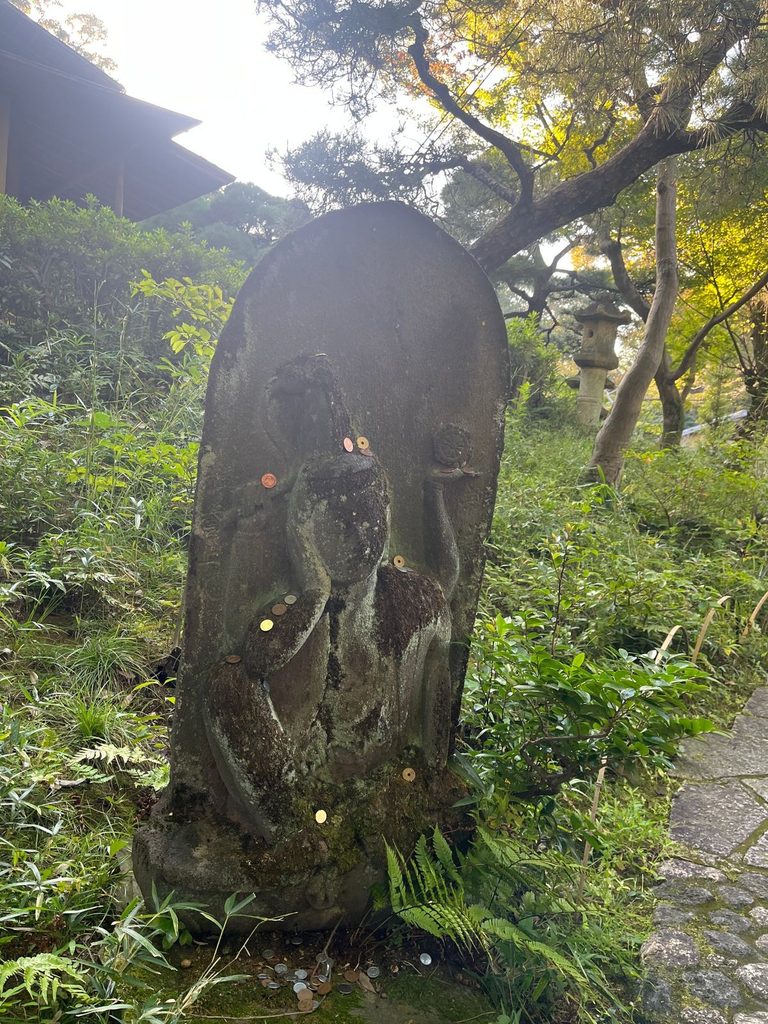
Beside the path, a weathered stone Buddha carries coins left by passers-by. Stones that came from far away have, over the years, become a place for quiet prayers.
Japanese tea houses beside Korean and Indian-inspired stones: the mix mirrors Nezu’s collection itself, which drew on Japan and East Asia alike.
A glass café in the trees
At one edge of the garden sits NEZUCAFÉ, walled in glass on three sides. From its tables you feel as if you are sitting among the trees, which makes it one of the most popular spots in the museum.
On the Sunday afternoon I visited, a long queue had formed at the door, so I passed it by this time. If the café is part of your plan, go on a weekday or soon after opening. Last orders are 15:00 for food and 16:00 for drinks, earlier than the museum closes.
Note: you cannot visit the café on its own. NEZUCAFÉ is open only to museum visitors, so you need to buy an admission ticket and enter the museum first.
Why travellers love it
That same Sunday, many of the people in the garden were visitors from Europe and North America. A garden where Japanese, Korean and Indian-inspired forms overlap lets you sense both the differences and the connections between these cultures in a single walk. English labels throughout help you place each piece in time.
Before you go
- Address: 6-5-1 Minami-Aoyama, Minato-ku, Tokyo. 8 minutes on foot from Omotesando Station, Exit A5
- Hours: 10:00–17:00 (last entry 16:30)
- Closed: Mondays (Tuesday if Monday is a holiday), between exhibitions, and over New Year
- Admission: ¥1,400 for regular exhibitions with an online timed ticket (¥1,600 at the door); special exhibitions from ¥1,600. Free for high-school students and younger
- A museum ticket is required for the garden, café and shop. NEZUCAFÉ is open 10:00–16:30 (last orders: food 15:00, drinks 16:00), and weekends can bring a queue
- No eating or drinking anywhere on the grounds, and no photography in the galleries. Tea houses are open only to tea-ceremony guests
- Check the latest details on the Nezu Museum website
See the galleries first, then the garden. Carrying the Buddhist figures and bronzes from inside out among the stones, you begin to see how one collector’s eye reaches into every corner of the grounds.