Where the Sea Is Too Blue — Walking Nagasaki’s Hidden Christian Story, from Endo’s Silence to Scorsese’s Film
On a hill above Nagasaki harbour, a small white church faces the sea. For almost 250 years, people in this region kept a forbidden faith alive in whispers, behind closed doors, and in prayers disguised as folk songs. Their story inspired Shusaku Endo’s novel Silence and, half a century later, Martin Scorsese’s film of the same name.
This is a journey best taken slowly: a hill of martyrs, Japan’s oldest church, a cathedral reborn from the atomic bomb, and a quiet coast at the edge of Kyushu where Endo found the village of his novel.
Nagasaki is a city of many layers. Dejima, the coal mines of Gunkanjima, the great shipyards, the atomic bomb, a food culture blending Japanese, Chinese and Dutch influences — there is far more here than one article can hold. This piece follows just one thread: the story of its Christians. For a wider view of the city’s history, and of the harbour seen from Kengo Kuma’s hotel on Mount Inasa, read A Front-Row Seat to the Harbour Lights: Kengo Kuma’s Garden Terrace Nagasaki and the Many Lives of a Port City.
A faith that went underground
Christianity reached Japan in 1549, when the Jesuit Francis Xavier landed in Kagoshima. Portuguese ships soon made Nagasaki their main port, and the town grew into Japan’s most Christian city, sometimes called the “Rome of Japan”.
The welcome did not last. In 1597, on the orders of Toyotomi Hideyoshi, twenty-six Christians were executed on a hill in Nagasaki. In 1614 the Tokugawa shogunate banned the faith across the country. Missionaries were expelled, and believers were made to step on fumi-e — images of Christ or Mary — to prove they had renounced it.
Many refused and died. Others stepped on the image and went home to pray in secret. These were the Sempuku Kirishitan, the Hidden Christians. For around 250 years, with no priests and no churches, they passed their prayers from parent to child. Their Mary sometimes took the form of the Buddhist goddess Kannon.
In 2018, twelve sites connected to them were inscribed by UNESCO as the Hidden Christian Sites in the Nagasaki Region.
Silence: the novel and the film
Shusaku Endo (1923–1996) was baptised as a child and spent his life asking what Christianity could mean to a Japanese person. In 1966 he published Silence. It follows a young Portuguese Jesuit, Sebastião Rodrigues, who travels secretly to Japan in the 1630s to find his mentor, Father Ferreira, rumoured to have renounced his faith.
Hiding among poor Christian villagers, Rodrigues watches them suffer for a faith he brought them. He prays, and God seems to answer with silence. In the end he faces the fumi-e himself. Endo does not give an easy answer; he asks whether love can sometimes mean stepping on what you hold most sacred.
Martin Scorsese read the novel in the late 1980s and spent more than 25 years trying to film it. Silence was finally released in 2016, with Andrew Garfield, Adam Driver and Liam Neeson. Although the story is set in Nagasaki, it was filmed entirely in Taiwan, on a recommendation from Ang Lee. Scorsese and his team did visit Nagasaki before filming to see the places behind Endo’s book.
So you will not find film sets here. What you will find is something quieter: the real hills, coasts and churches that Endo walked, and that shaped every page.
Nishizaka Hill: where twenty-six were martyred
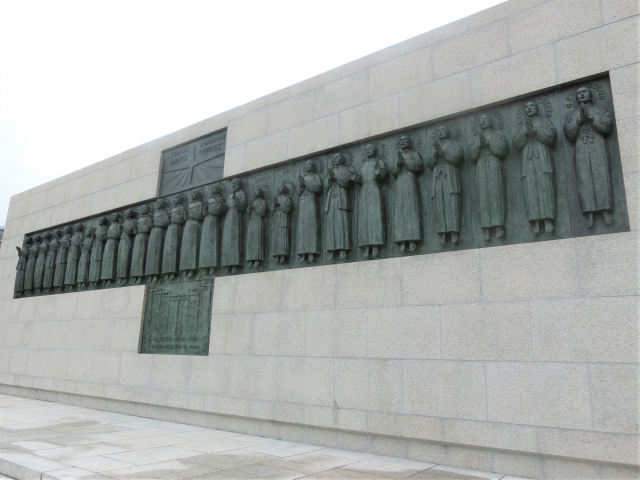
Just a five-minute walk from Nagasaki Station, Nishizaka Park sits on a small hill. Here, on 5 February 1597, six European missionaries and twenty Japanese believers were crucified. Most had been arrested in Kyoto and Osaka and made to walk almost 1,000 kilometres to Nagasaki. The youngest were boys of 12 to 14.
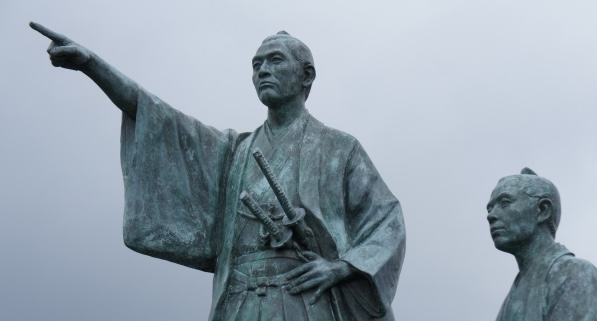
A long bronze relief of the twenty-six, life-sized and standing side by side in prayer, was made by the sculptor Funakoshi Yasutake, himself a Catholic convert. Behind it, the Twenty-Six Martyrs Museum, opened in 1962, holds a letter written by Francis Xavier and the Snow Maria, a painting of Mary that Hidden Christians secretly treasured.
It is a good place to begin. Standing on the hill, you understand that the story of Silence was not invented; it happened here, within sight of today’s busy station.
Oura Church: the morning the hidden came forward
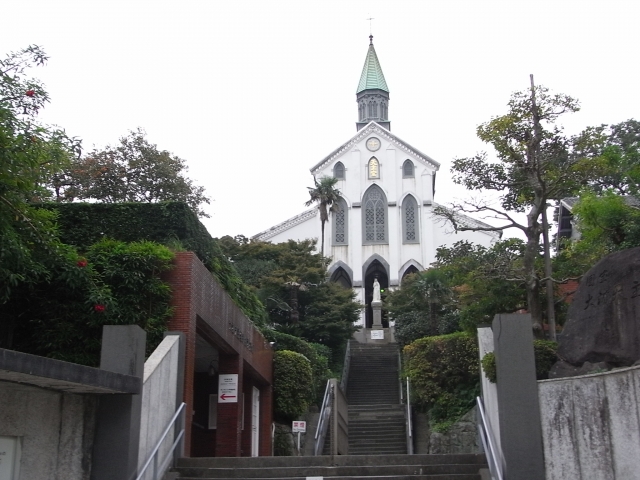
When Japan reopened its ports in the 1850s, foreign merchants settled on the hills of Minami-Yamate. For them, two French priests of the Paris Foreign Missions Society, Father Furet and Father Petitjean, built a small Gothic church facing Nishizaka Hill. It was completed in 1864 and dedicated to the twenty-six martyrs. Today it is the oldest surviving church in Japan, a National Treasure and part of the UNESCO site.
A few weeks after it opened, in March 1865, a group of villagers from Urakami came quietly to the door. One woman approached Father Petitjean and whispered that their hearts were the same as his. They asked where the statue of Mary was. After seven generations in hiding, Japan’s Christians had revealed themselves. The event is remembered as the “Discovery of the Hidden Christians”, and the Virgin they asked for still stands inside.
Step in, and the light falls softly through French stained glass. Photography is not allowed inside, so let the moment stay with you. Admission includes the neighbouring Christian Museum, where small objects of hidden prayer are displayed. Afterwards, the stone slopes around the church lead naturally to Glover Garden and its views over the harbour.
Urakami Cathedral: faith, exile and the atomic bomb
The villagers who came forward at Oura paid a high price. In 1867 the authorities arrested the Christians of Urakami and exiled more than 3,000 of them to other parts of Japan. Hundreds died before the ban was finally lifted in 1873. When the survivors returned, they began building a cathedral on the very land where their ancestors had been forced to step on fumi-e.
Paid for with the small earnings of the parishioners, the red-brick Urakami Cathedral was completed in 1925 and was then the largest church in East Asia. On 9 August 1945, the atomic bomb exploded about 500 metres away. The cathedral collapsed, and the priests and worshippers inside, preparing for the Feast of the Assumption, were killed.
The present cathedral was rebuilt in 1959 and later faced in brick to recall the original. In a side chapel rests the Bombed Mary, the scorched wooden head of a statue found in the rubble, her eyes burned away. Around the grounds stand headless stone saints and a fallen bell tower, left where they fell. A fragment of the old wall was also moved to nearby Hypocenter Park.
For the people of Urakami, the bomb was one more trial in a long history of suffering. Standing before the Bombed Mary, the question Endo asked in Silence — where is God when people suffer? — no longer feels like literature.
Sotome: the coast of Silence
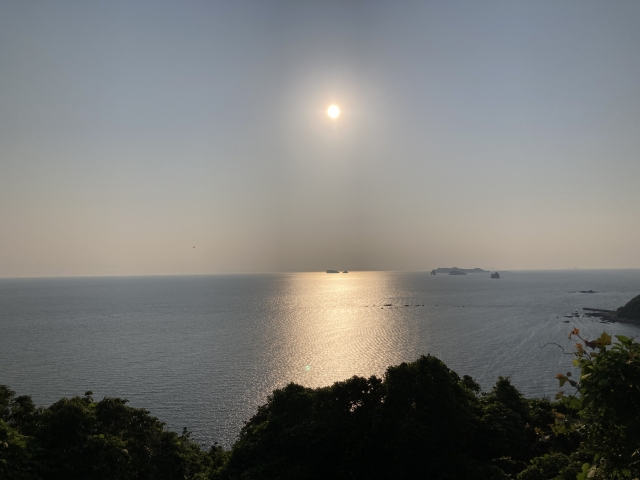
About an hour north-west of the city, the road follows a rugged coast above the Sumo-nada Sea. This is Sotome, a region of steep hillsides and small fishing villages where Hidden Christians lived for centuries. Two of its hamlets, Shitsu and Ono, are part of the UNESCO site. Endo used the old village of Kurosaki here as a model for Tomogi, the village at the heart of Silence.
On a cape above the sea stands the Endo Shusaku Literary Museum, opened in 2000 with the support of Endo’s family. Inside are his manuscripts, photographs and a recreation of his study. On a clear day, the windows look out to the Goto Islands, where many Christians once fled.
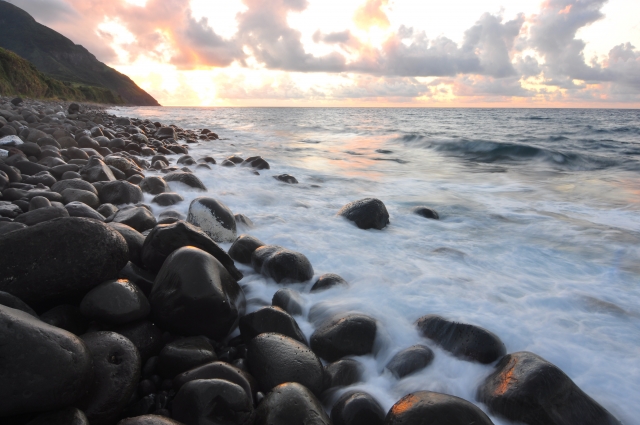
A short walk away, inside the Shitsu Culture Village, two large stones look down on the sea. This is the Silence Monument, unveiled in 1987 while Endo was still alive. He called this spot a place God had kept for him. On one stone are words he wrote for it, which might be translated as: “Humans are so sad, Lord, and the sea is so blue.”
Stay until evening if you can. The roadside station above the museum is known for some of the most beautiful sunsets in Nagasaki. As the sea turns gold and then deep blue, Endo’s line makes perfect sense.
Nearby, the white Shitsu Church and the De Rotz Memorial Museum tell of Father Marc de Rotz, a French priest who came in 1879 and helped the poor villagers with medicine, weaving and noodle-making. His Doro-sama somen noodles are still made today.
A slow two-day route
- Day 1 — the city. Morning at Nishizaka Hill and the Twenty-Six Martyrs Museum. Tram to Urakami Cathedral, then Hypocenter Park and the Atomic Bomb Museum. Late afternoon at Oura Church and the lanes of Minami-Yamate.
- Day 2 — Sotome. Drive or take the bus north to the Endo Shusaku Literary Museum. Walk to the Silence Monument, Shitsu Church and the De Rotz Memorial Museum. Stay for the sunset before heading back.
If you have read Silence or seen the film, this trip will feel like stepping into its pages. If you have not, read it on the way. It is a short book, and Nagasaki is the best place in the world to finish it.
Practical notes
- Twenty-Six Martyrs Museum: 5-minute walk from JR Nagasaki Station. 9:00–17:00. Closed 31 Dec–2 Jan.
- Oura Church: 5-minute walk from Ouratenshudo tram stop. Generally 8:30–18:00 (last entry 17:30), shorter in winter. Adults ¥1,000, including the Christian Museum. No photography inside. Official website
- Urakami Cathedral: about 10 minutes’ walk from Matsuyama-machi or Peace Park tram stops. Open 9:00–17:00, free (donations welcome). An active church: visit quietly and avoid Mass times.
- Endo Shusaku Literary Museum: 77 Higashi-shitsu-machi, Nagasaki. 9:00–17:00 (last entry 16:30). Closed 29 Dec–3 Jan. Adults ¥540. About 1 hour by car from central Nagasaki, or around 1 hour 20 minutes by bus with a change at Sakuranosato Terminal. Official website
- Churches in Sotome: churches inside the UNESCO villages ask visitors to contact the Hidden Christian Sites Information Center in advance.
- Dress and manners: these are living places of prayer. Cover your shoulders, speak softly, and never photograph people at worship.
Hours and prices may change. Please check each official website before your visit.
Read next
A Front-Row Seat to the Harbour Lights: A Night at Kengo Kuma’s Garden Terrace Nagasaki on Mount Inasa
From Nishizaka Hill to Urakami and the shores of Sotome, end a day spent with the memory of Nagasaki’s hidden Christians halfway up Mount Inasa, watching the harbour lights from an ocean-view suite.
Read the story →