White Soba and an Edo-Era Echo: Sohonke Sarashina Horii in Azabu-Juban
Just off the main shopping street in Azabu-Juban, a large paper lantern hangs against a red-brick wall. Two thick brushstrokes spell out soba (そば). Behind a deep-crimson noren curtain sits a noodle house that has been around, on and off, for more than 230 years.
This is Sohonke Sarashina Horii (総本家 更科堀井), founded in Edo’s Azabu district in 1789, the year the French Revolution began.
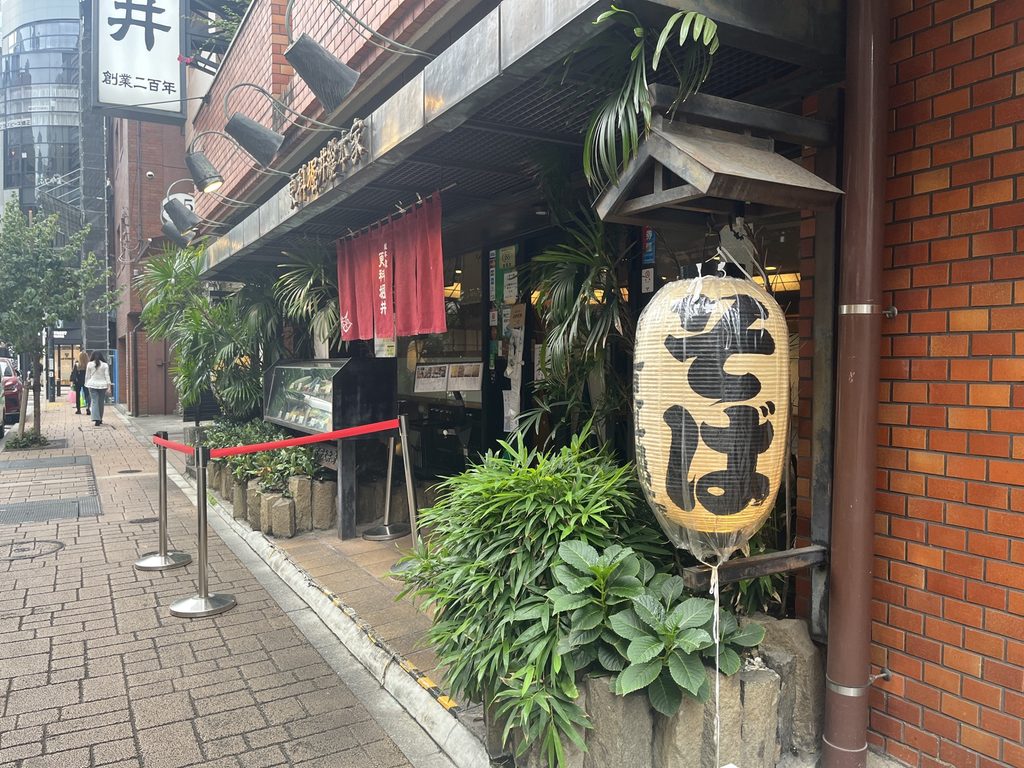
A giant “soba” lantern, red brick and a signboard marking two centuries in business.
From cloth merchant to soba maker
The founder is said to have been a travelling merchant who sold Shinano-nuno, a hemp cloth from Shinshu (today’s Nagano Prefecture). He was so good at making soba that he eventually opened a noodle shop instead. He set up in Azabu Nagasaka-cho, near the Edo residence of the Hoshina clan, the feudal lords of his home province.
The name Sarashina (更科) has a small story inside it. It takes one character from Sarashina (更級), a buckwheat-growing district in Shinshu, and pairs it with shina (科), which the Hoshina family allowed him to borrow from their own name. A place and a patron, folded into two characters.
The shop went on to serve daimyo households and great temples. By the mid-Meiji period it was reportedly delivering soba to the imperial family. In 1941, with Japan at war and its finances failing, the shop closed. The noren went up again in December 1984, here in Azabu-Juban. Today the eighth generation of the Horii family runs the house.
Knowing that the thread was cut and then tied back together changes how the doorway looks as you step through it.
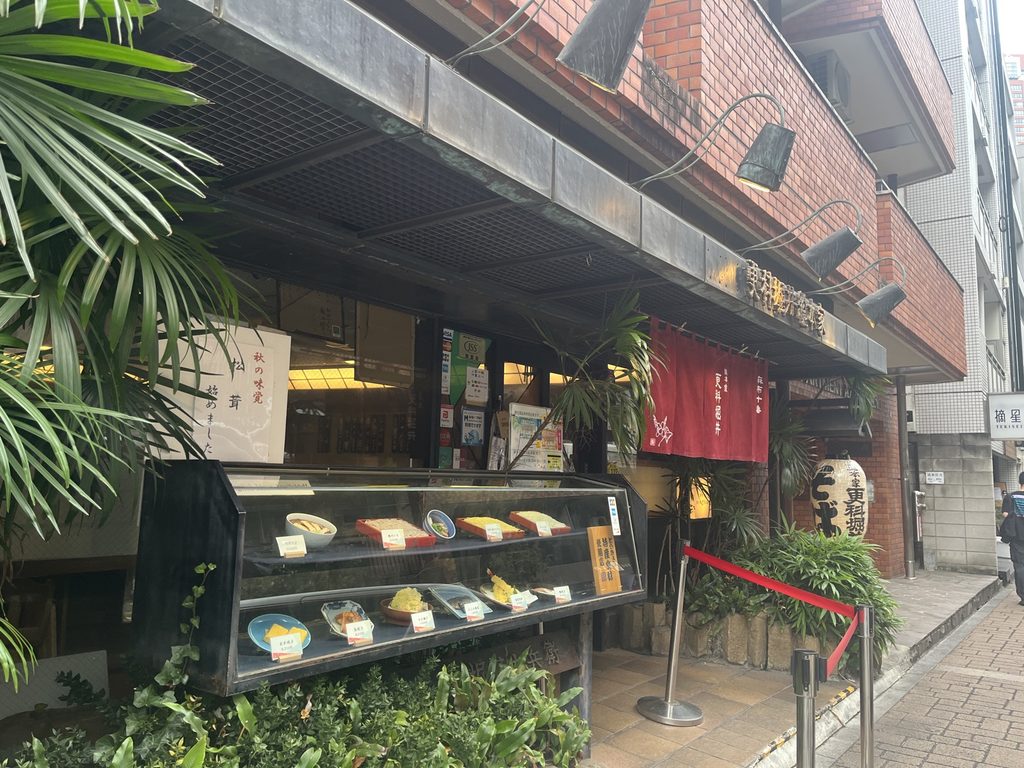
Seasonal notices by the door. On our visit, matsutake mushrooms had just arrived for autumn.
Start small: dashimaki tamago
As soon as we sat down, a glass of chilled soba-cha, roasted buckwheat tea, was set in front of us. In Japan, most restaurants bring free water or tea once you are seated, and refills cost nothing; just ask. Before any food arrived, we enjoyed the tea’s toasty, nutty aroma, a quiet preview of the buckwheat to come.
In the old Edo way, you begin at a soba shop with something to nibble before the noodles. We ordered dashimaki tamago, a rolled omelette folded with dashi stock.
Two thick slices arrive on a pale-blue plate, so soft they wobble when you lift them. The seasoning carries just a hint of sweetness, a typical touch in Tokyo and the wider Kanto region. It is not sugary; you simply notice a soft roundness behind the dashi.
Beside them sits a mound of grated daikon radish soaked in a soy-forward dashi. On its own it is noticeably salty. Spoon a little onto the omelette, though, and the two balance each other perfectly: the daikon’s saltiness meets the egg’s mild sweetness. The egg and the daikon are meant to be eaten together.
That daikon would also make a fine snack with drinks. If you come in the evening with a glass of sake, you will probably find yourself picking at it slowly. A card on our table offered a small sake tasting flight.
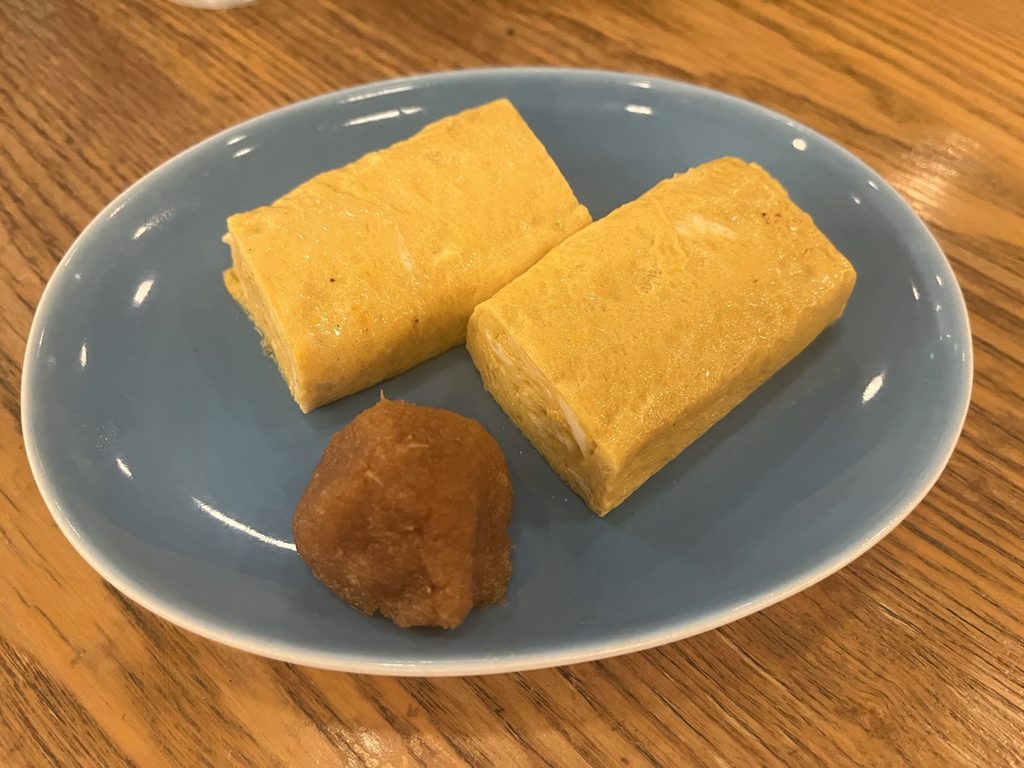
Wobbly, lightly seasoned dashimaki with dashi-soaked grated daikon.
Soba so white it almost glows
Then comes the main event: sarashina.
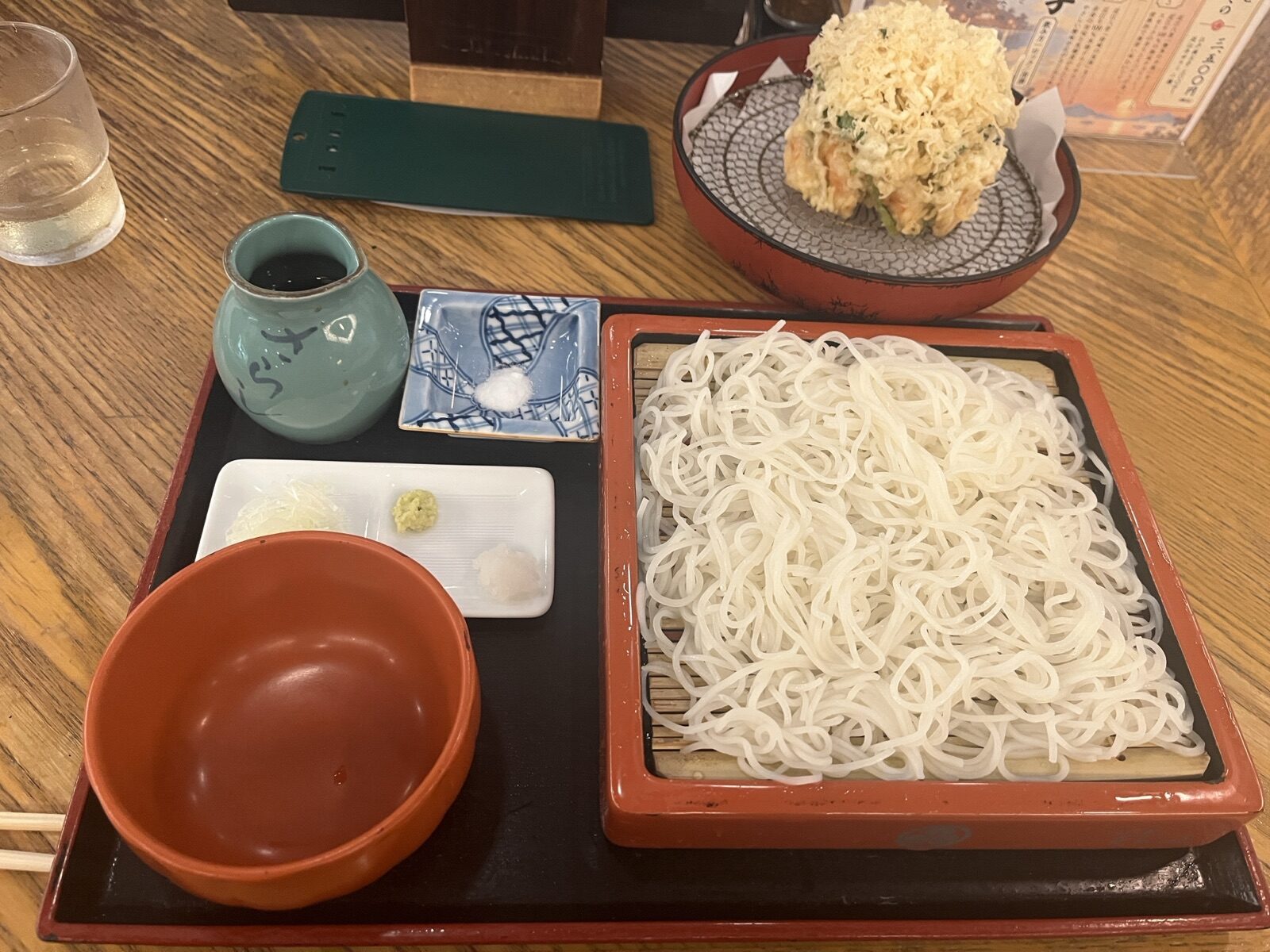
The noodles sit on a vermilion lacquered tray, and they are startlingly white, fine and glossy. Most soba is grey-brown. Sarashina is milled only from the very heart of the buckwheat seed, leaving out the outer layers that give soba its darker colour and earthy aroma. What remains is pale, faintly sweet, and silky as it slips down.
The texture is what surprised us most. These noodles are so smooth and slippery that they hardly seem like soba at all; it is almost a different food from the everyday buckwheat noodle. One mouthful made it clear why this white soba has survived from the Edo period to the present day.
How to eat it:
- First, plain. Taste a few strands with nothing at all. The aroma is subtle and the sweetness is soft.
- Then, a light dip. Dip only the bottom third of the noodles into the tsuyu, the dipping sauce. Edo custom says that drowning them hides the soba.
- Add condiments slowly. Bring in the spring onion, wasabi and grated daikon partway through, when you want a change.
- Try a pinch of salt. The small dish of salt is there for a reason. A few grains bring out sarashina’s sweetness beautifully.
A note on slurping. In Japan, soba is traditionally slurped, and a good loud slurp is even considered stylish. Here, though, we noticed almost no one slurping noisily. Perhaps it is the neighbourhood, so close to cosmopolitan Roppongi, but the room has a calm, quiet air. If the sound of slurping makes you uneasy, you will likely feel comfortable here. Equally, if you want to try a gentle slurp yourself, no one will mind.
We ordered kakiage mori (¥2,400). It normally comes with regular dark mori soba, but for an extra ¥100 you can switch to white sarashina. At this shop, that small upgrade is well worth it.
The kakiage is a lacy fritter of mixed tempura that fans out like a flower. Its crisp, toasty richness plays well against the delicate noodles.
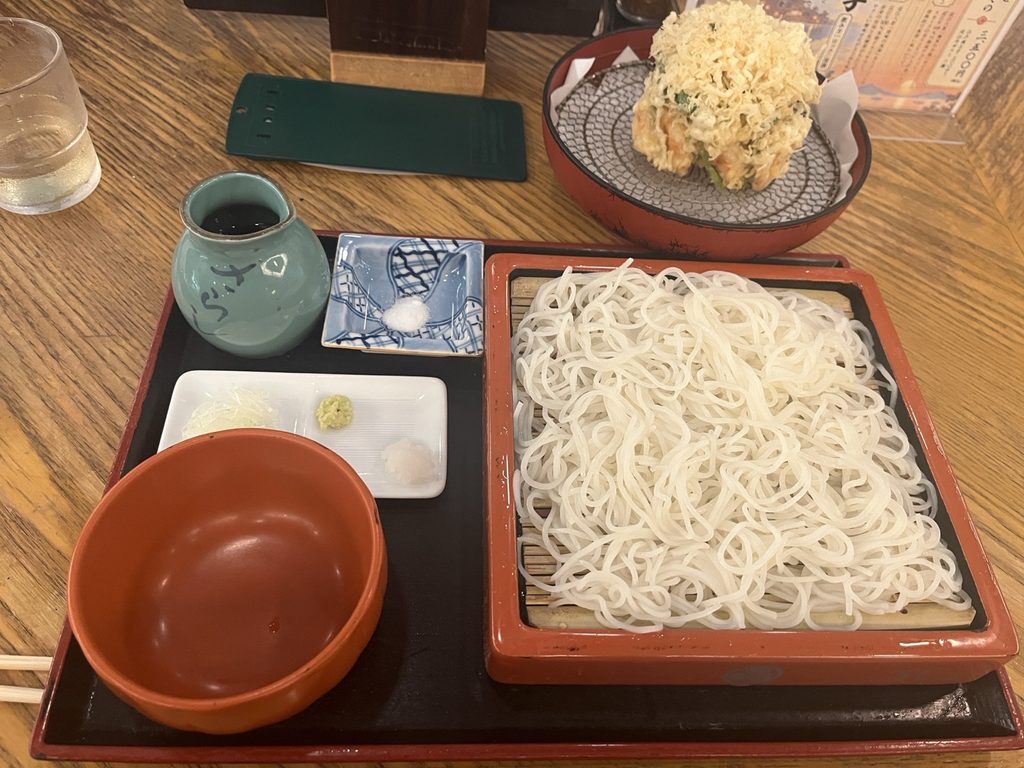
Sarashina soba, made only from the heart of the buckwheat seed.
If you can manage a second tray
The menu holds two more kinds of soba worth knowing:
| Soba | What it is |
|---|---|
| Sarashina (さらしな) | The house signature: white, delicate and lightly sweet |
| Mori (もり) | Darker soba milled in-house from Ibaraki buckwheat, with a deeper aroma |
| Kawari soba (季節の変わりそば) | Sarashina kneaded with a seasonal ingredient such as yuzu or mugwort. In late October it is kuko-kiri, made with goji berries |
On our visit, kuko-kiri was on the menu as the seasonal soba. Honestly, after the kakiage soba and the omelette we had no room left, so we had to pass. We are saving it for next time. Leaving a little something for a return visit feels right at a place like this.
If you are visiting as a pair, order one white sarashina and one dark mori and share them. It is remarkable how differently the same seed can taste.
The last cup: sobayu
As you finish, staff bring a square vermilion lacquer pot called a yutō (湯桶). It holds sobayu, the hot water the noodles were cooked in.
Pour it into the tsuyu left in your cup and drink it like a mild broth. Sarashina’s sobayu is clean and gentle rather than thick. By the time you finish, the meal has settled into a slow, warm afterglow, the feeling Japanese call yoin (余韻).
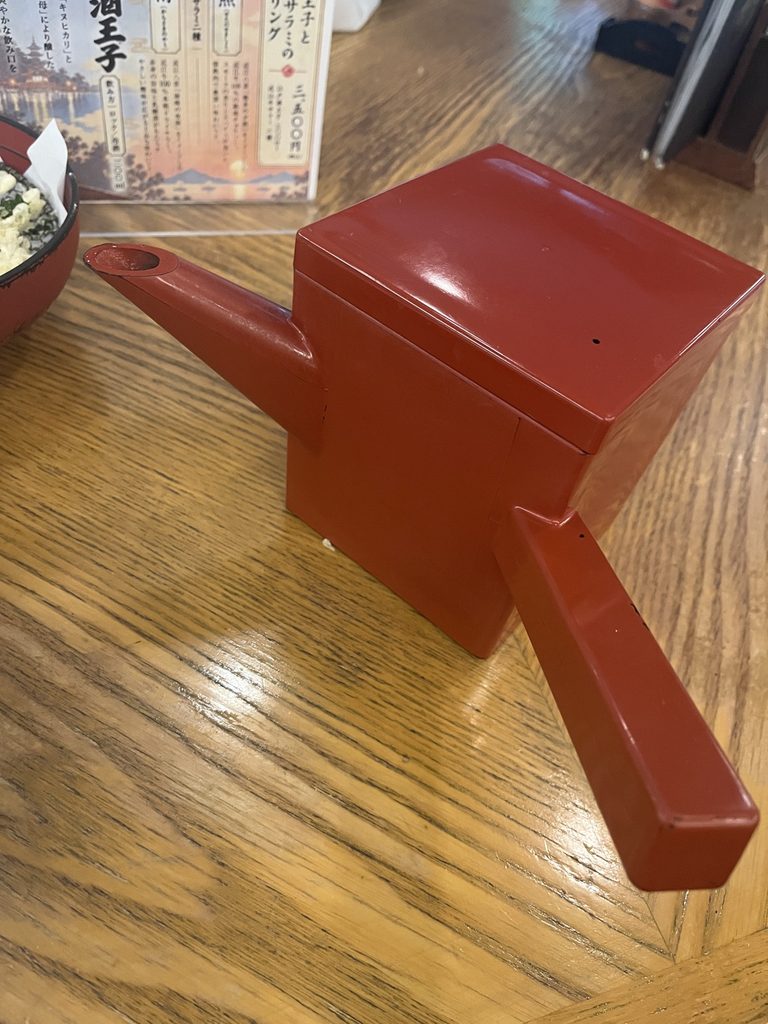
The angular pot itself is pure Edo soba-house design, and well worth a photograph.
Afterwards: a slow walk through Azabu-Juban
When you leave, take your time on the way back. Azabu-Juban’s shopping street mixes old family shops with new cafés and is easy to wander on foot. In autumn, walk a few minutes further to Zenpuku-ji temple and its great ginkgo tree as it turns gold.
Before you go
- Name: Sohonke Sarashina Horii, Azabu-Juban main shop (総本家 更科堀井 麻布十番本店)
- Address: 3-11-4 Motoazabu, Minato-ku, Tokyo
- Phone: +81-3-3403-3401
- Access: about 5 minutes on foot from Azabu-Juban Station, Exit 7 (Toei Oedo Line); about 7 minutes from Exit 4 (Namboku Line); about 10 minutes from Roppongi Station, Exit 3 (Hibiya Line)
- Hours:
- Weekdays: 11:30–15:30 (last order 15:00) and 17:00–20:30 (last order 20:00)
- Weekends and holidays: 11:00–20:30, open all day (last order 20:00)
- Reservations: Weekdays, seat-only reservations are accepted. Weekends and holidays, reservations are for the kaiseki course only, at least 3 days ahead. No reservations in December.
- Prices (tax included): Sarashina ¥1,100 / Mori ¥1,000 / Seasonal kawari soba ¥1,240 / Kakiage mori ¥2,400 (+¥100 to switch to sarashina) / Dashimaki tamago ¥820
- Tips: Like most Tokyo restaurants, it tends to be busiest from about 12:00 to 13:00. Arrive right at opening or after 13:30 to avoid the lunch rush. Weekends are especially busy.
- Official site: sarashina-horii.com
Hours and prices are from the official website and our visit, as of October 2026. Please check there before visiting.
You dip a strand of white soba into the sauce, and 230 years of Edo settle quietly into one mouthful. Long after you step back onto the street, the faint sweetness and the warmth of the sobayu stay with you.