Hagi Ware — The Pottery That Slowly Takes On Your Life
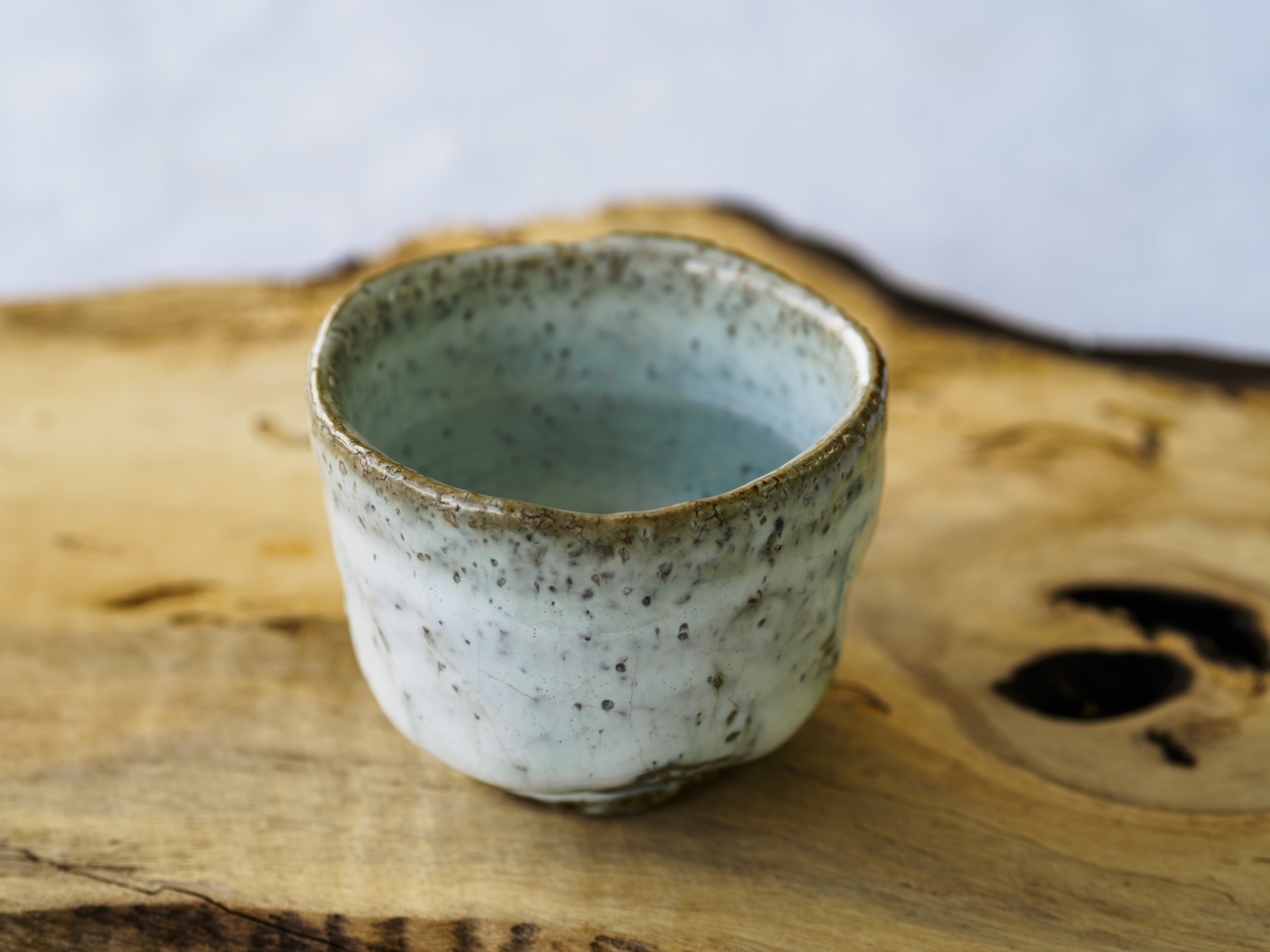
Pour green tea into a pale, milky cup each morning. A year later, faint lines have surfaced across its glaze and the colour has softened into something that feels like yours. That is Hagi ware, the pottery of Hagi in Yamaguchi Prefecture, made here for more than four centuries. It is not finished when it leaves the kiln. It is finished by the person who uses it.
This guide covers what makes Hagi ware special, the pieces and potters worth knowing, and where to buy the real thing — in Hagi itself, in Tokyo, Osaka, Nagoya and Fukuoka, and online.
What makes Hagi ware special
1. A tea master’s bowl. Japanese tea people have an old ranking: Ichi Raku, ni Hagi, san Karatsu — first Raku, second Hagi, third Karatsu. Hagi ware began as the official kiln of the Mōri lords of Hagi, founded by the Korean potter brothers Yi Jak-gwang and Yi Kyeong. It carries the spirit of the Korean tea bowls Japanese masters prized, reshaped over centuries into something distinctly Hagi.
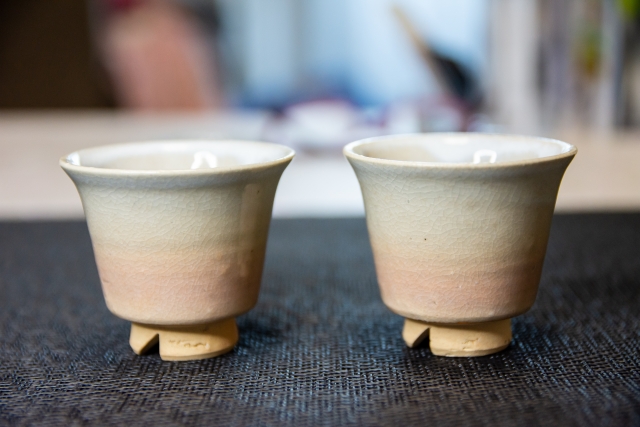
2. Soft clay, generous glaze. The base clay, Daidō clay, comes from near Hōfu. Potters blend it with Mitake clay from around Hagi and clay from Mishima, a small island in the Sea of Japan, so each kiln’s pieces feel a little different. A cloudy white glaze made with straw ash pools thickly over the body. Fired slowly at relatively low temperatures, a Hagi cup feels light, plump and warm in the hand.
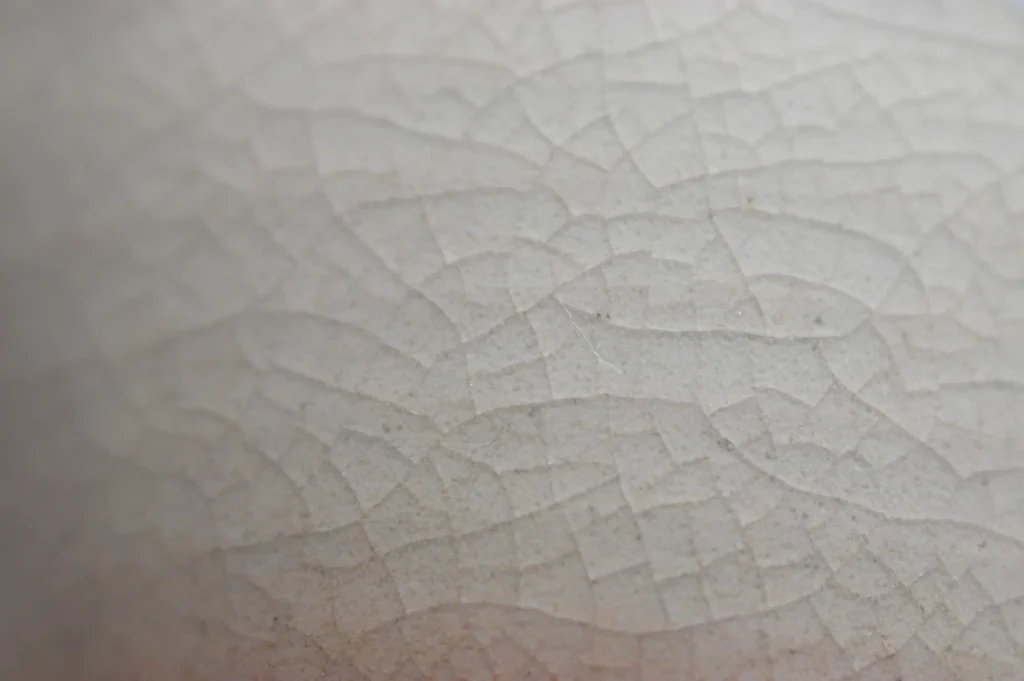
3. Hagi no nanabake — “the seven changes of Hagi.” Look closely and you’ll see fine crackles in the glaze, called kannyū. They form as the clay and glaze shrink at different rates while cooling. Over years of use, tea and sake seep into these lines and the colour deepens. Locals call it the seven changes, and it is why Hagi is described as a vessel its owner raises.
4. The notched foot. Many Hagi tea bowls have a small cut in the foot ring, known as wari-kōdai or kiri-kōdai. It is a quiet, slightly rustic detail you’ll start spotting everywhere once you know it.
Care tip: Before first use, many kilns suggest simmering the piece in rice-rinsing water or soaking it in water for a while, so stains and odours soak in less. Always let Hagi ware dry fully after washing. Follow the care leaflet that comes with your piece — methods vary by kiln.
Notable Hagi ware and the families behind it
- Ko-Hagi (“old Hagi”). Early Edo-period pieces from the lord’s kiln, including works by the first three generations of the Saka family. The Hagi Uragami Museum has shown bowls such as the tea bowl named Rika, attributed to the first Saka Kōraizaemon.
- The Saka Kōraizaemon family. One of Hagi’s two founding lines, tracing back to Yi Kyeong. The 14th generation took the name in 2022, after roughly eight years without a head of the family.
- The Miwa Kyūsetsu family. The other great line of official potters. The 10th (Kyūwa) and 11th (Jusetsu) Kyūsetsu created a pure white glaze known as Kyūsetsu-jiro and carried Hagi into modern ceramic art. Jusetsu was designated a Living National Treasure for Hagi ware. His 2006 bowl Oni-Hagi Yōhen Wari-kōdai Chawan — rough, powerful, with a split foot — is in the Hagi Uragami Museum collection.
- The Sakakura Shinbei family. After Hagi lost the lords’ patronage in the Meiji era, Sakakura Shinbei XII revived it as tea ceramics.
- Yoshika Taibi. A member of the Japan Art Academy honoured as a Person of Cultural Merit. The Yoshika Taibi Memorial Museum in Hagi traces fifty years of his work.
- Hagi today. Potters such as Hamanaka Shirō and Shibuya Eiichi make pieces that sit easily on a modern table, and the N▶400 series — directed by Hagi gallery JIBITA and made by Tenryū Kiln — imagines Hagi’s “next 400 years.”
Where to buy in Hagi
Hours change, so check official sites before you go.
| Place | Why go | Area & notes |
|---|---|---|
| Hagiyaki Kaikan | Run by Hagi-jō Kiln. A wide range from tea utensils to everyday tableware, plus pottery classes and a café. The easiest first stop | Chintō. 8:30–17:00, open daily. About 5 min by car from Shōka Sonjuku |
| Tenryū Kiln | Two lines: traditional pieces and modern originals in series like Hanabira and Leaf, in many colours | Chintō. 9:00–17:00. 15 min walk from Higashi-Hagi Station. Wheel classes |
| Genshū Kiln | A gallery in a 100-year-old house by the Aiba canal, working with Daidō clay and classic white Hagi glaze | Kawashima. Look for the red parasol |
| Senryūzan Kiln | Founded 1826, now led by Yoshika Akira, grandson of Yoshika Taibi. Climbing kiln and kick-wheel studio open to view | Chintō. 9:00–17:00, closed Wed |
| JIBITA | A thoughtfully curated gallery: Hagi pieces by Hamanaka Shirō and Shibuya Eiichi, plus the N▶400 series | Castle town. 13:00–18:00 (weekends 10:00), closed Fri & 3rd Thu |
| Ōya Kiln | Opened in 1969 by Hamanaka Gesson; tea ceramics and daily ware in a leafy setting | Outskirts |
| Gashūdō | A Hagi specialist strong on young potters, with mugs from ¥1,650 | Horiuchi. 10:00–18:00 |
Time it with a pottery festival. The Hagiyaki Festival runs 1–5 May every year, and the Hagi-Tamachi Hagiyaki Festival takes place in autumn. Kilns and shops across town take part, potters stand at their own stalls, and a “Hagi-yaki concierge” desk helps match you to a kiln.
Where to stay in Hagi
The Luxury of Waiting for Dusk: A Night at Hagi Ichirin, a Seaside Onsen Ryokan in Hagi
After a day among Hagi’s kilns and galleries, end at Kikugahama Beach, just beyond the old castle town. Watch the sun sink into the Sea of Japan from a room with its own open-air bath, your new piece of Hagi ware still close at hand.
Read the story →Where to buy in Tokyo, Osaka, Nagoya and Fukuoka
| City | Where | Notes |
|---|---|---|
| Tokyo | Oidemase Yamaguchi-kan, Nihonbashi 2-3-4 | Yamaguchi Prefecture’s official shop, with Hagi ware among its crafts. 10:30–19:00, 2 min from Nihonbashi Station exit B3 |
| Osaka, Nagoya, Fukuoka | Major department stores (Japanese tableware floors and art galleries) | There are no dedicated Hagi shops; department stores are the place to buy. Everyday pieces sit on tableware floors, signed tea bowls in the art galleries. Tokyo’s Nihonbashi and Ginza department stores carry Hagi ware the same way |
Stock varies by store and season, so call ahead to ask whether Hagi ware is in stock.
Getting it home: Hagi ware is fragile. Ask the shop to wrap it well, and if you’re flying, keep it in your carry-on bag rather than checked luggage.
Bringing Hagi home online — how to choose well
| Site | Why it’s trustworthy |
|---|---|
| Hagi-jō Kiln online shop “George no Utsuwa” | Linked from Hagiyaki Kaikan’s official site; direct from the kiln (Japanese) |
| Tenryū Kiln online shop | Linked from Tenryū Kiln’s official site; modern and traditional lines (Japanese) |
| Hagiyaki Festival online sale | Usually around 1–15 May, alongside the spring festival |
| Tezumi and Osara | English-language specialist retailers that name the kiln or potter for each piece; check shipping to your country |
Five things to look for
- Is the shop linked from the kiln’s or potter’s own website?
- For signed work, does it come with a tomobako (box signed by the potter) and a shiori (potter’s profile)?
- Are the seller’s name, address and phone number clearly shown?
- Be wary of “Living National Treasure” pieces priced far below market, or listings that only say “guaranteed authentic.”
- For valuable pieces, buy from an established gallery or department store that documents provenance.
A cup to carry the journey home
The day you buy a Hagi cup is only the beginning. Morning tea, a weekend sake — the clay quietly takes it all in and changes. Years from now, the cup you chose in an old castle town may have turned the very colour of the memory. That, perhaps, is Hagi’s gift: a resonance that keeps growing long after you’ve left.
Read next: Another vessel that grows with you — lacquerware coated in rare Japanese urushi, a cupful from each tree, that deepens to a red glow over a decade. → Jōbōji-nuri: A Cup of Lacquer From a Single Tree, and Bowls That Glow With Time