Jōbōji-nuri: A Cup of Lacquer From a Single Tree, and Bowls That Glow With Time
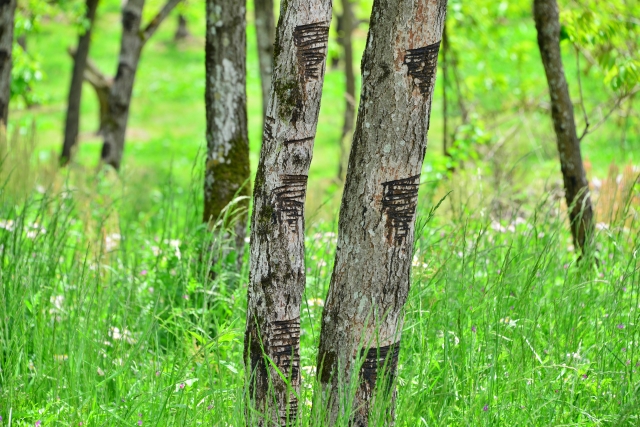
Early on a summer morning in the hills of northern Iwate, a craftsman makes a small cut in the bark of a lacquer tree. Milky sap slowly beads along the line. He scrapes it up with a spatula and moves on to the next tree. A tree grown for 15 to 20 years yields only about a cupful of lacquer in a whole summer. Every Jōbōji-nuri bowl begins with those drops.
This is the story of Jōbōji, the town that keeps Japan’s own lacquer alive, and of its plain, unadorned bowls that grow more beautiful over a decade of use.
The time held in a cup of lacquer
Japan’s lacquer heartland. Northern Iwate, centred on Jōbōji in Ninohe City, produces roughly 70–80% of all lacquer harvested in Japan. About more than 90% of the urushi used in Japan today is imported, so home-grown lacquer is rare — and much of it comes from here. Jōbōji-nuri is coated with this local, domestic lacquer. While most lacquerware relies on imported urushi, a Jōbōji bowl wears lacquer from the very hills where it was made.
The tapper’s season. Tapping runs from mid-June to around October. A single tapper tends more than 200 trees a year, making short cuts at first and longer ones as the season goes on, so as not to exhaust the tree. Each tree gives about 180–200 grams. The best sap, in both quantity and quality, comes in the height of summer, from late July to the end of August.
The lacquer that protects national treasures. Jōbōji lacquer has been used to restore national treasures such as the shrines of Nikkō Tōshō-gū. Since fiscal 2018, Japan’s Agency for Cultural Affairs has required domestic lacquer, in principle, for restoring national treasures and important cultural properties. “Jōbōji urushi” is also protected as a Geographical Indication.
Passing it on. Ninohe trains young tappers and plants new lacquer trees. It even lends lacquer bowls and spoons to local children free of charge, so the next generation grows up eating from them.
What makes Jōbōji-nuri special
▶ Watch: the raft of Jōbōji-nuri (TEWAZA “JOBOJI-NURI” / Japan Traditional Crafts Aoyama Square)
1. Born from a temple’s daily life. Tradition holds that the monk Gyōki founded Tendai-ji temple here in 728 by order of Emperor Shōmu, and that its monks made lacquered bowls for their own use. Later the Nanbu domain promoted the craft, and it became part of everyday life in the region.
2. Beauty without decoration. Jōbōji-nuri is usually a single colour, black or vermilion, with little or no ornament. The top coat isn’t polished, leaving a soft, matte finish that lets the lacquer itself speak.
3. Built from lacquer alone. Instead of mixing clay powder into the base layers, makers build the piece up in coat after coat of lacquer, in the old way. It takes over 40 steps and around three months. Jōbōji lacquer is rich in urushiol, the main component of urushi, making the finish hard and durable.
4. A decade to a red glow. Use, wash, wipe dry — and repeat. Little by little, the matte surface is burnished to a mirror-like sheen. After about ten years, a bowl takes on a deep, reddish glow. Like Hagi ware, it is finished by the life of the person who uses it.
5. Repairable unless broken. Chips and worn lacquer can be repaired as long as the piece isn’t completely broken, so a bowl can last decades, even generations.
Visiting Jōbōji
The temple where the craft began and the workshop where it continues are within walking distance. Check official sites for hours before you go.
| Place | Why go | Notes |
|---|---|---|
| Tekiseisha | Opened in 1995, a Jōbōji-nuri workshop and shop selling pieces made with Jōbōji lacquer, including work by other makers. Chopsticks from ¥3,850, bowls from ¥7,150. Lacquer lessons and tours | Oyamanakamaeda, Jōbōji-machi, Ninohe. 8:30–17:00; closed at New Year and on Tuesdays from January to March. Free parking |
| Tendai-ji Temple (Japanese) | Over 1,200 years old and the oldest Tendai sacred site in Tōhoku; its principal Shō-Kannon statue is an Important Cultural Property. The birthplace of Jōbōji-nuri | Oyamakubo, Jōbōji-machi. 8:30–17:00 (until 16:00 Nov–Mar). Admission ¥500 |
Getting there: From Ninohe Station on the Tōhoku Shinkansen, take the JR Bus Tōhoku bound for Jōbōji (about 30 min) to the Tendai-ji stop. Tekiseisha is about 5 minutes’ walk; Tendai-ji is about 20. Buses are infrequent, so check the timetable first.
Where to buy in Japan’s cities
| City | Where | Notes |
|---|---|---|
| Tokyo, Osaka | WAGOTO floors at Takashimaya (Nihombashi, Shinjuku, Tamagawa, Osaka) | Jōbōji-nuri is stocked; ask the floor which pieces are available |
| Tokyo | Iwate Ginga Plaza, 5-15-1 Ginza | Iwate Prefecture’s official shop, which carries crafts; call ahead to check for Jōbōji-nuri. In front of Higashi-Ginza Station exit 6 |
We couldn’t confirm a shop that regularly stocks Jōbōji-nuri in Nagoya or Fukuoka; buying online is the surest option there.
Getting it home: Lacquerware is light and won’t shatter, which makes it an ideal souvenir — but it can scratch. Keep it in its box or bag, and if you’re flying, pack it in your carry-on rather than checked luggage.
Bringing Jōbōji home online — how to choose well
| Site | Notes |
|---|---|
| Takashimaya online store | Search “浄法寺塗.” Since autumn 2024, part of each sale goes to Ninohe City to buy lacquer saplings (Japanese site; check delivery options) |
| Tekiseisha | Contact the workshop directly about orders and overseas delivery |
Five things to look for
- Jōbōji or domestic lacquer: some pieces use domestic lacquer only for the top coat, so ask where it’s used
- Genuine urushi: urethane or synthetic coatings won’t age the same way
- A named maker: the workshop or craftsperson should be clearly stated
- Repairs: if you plan to use it for ten or twenty years, buy where it can be mended
- Start with a soup bowl, a lipped bowl (katakuchi) or chopsticks: everyday pieces show the change best
Caring for Jōbōji-nuri
- Wash gently with lukewarm water, mild detergent and a soft sponge
- Wipe dry straight away with a soft cloth — this repeated wiping is what builds the sheen
- No dishwasher, microwave, abrasive cleanser or scouring pads
- Keep it away from direct sun, air-conditioner drafts and very dry places
- Pouring boiling liquid in suddenly can cloud the surface; let very hot food cool a little first
From a drop of lacquer to a decade of light
A tree grown for fifteen years or more gives a single cup of lacquer in one summer. A craftsperson spends three months layering it into one plain bowl. Then its owner, wiping it day after day for ten years, draws out a deep red glow. Three kinds of time — the tree’s, the maker’s and yours — rest quietly in every Jōbōji bowl. Your morning tea from one may leave a slightly deeper resonance than usual.
Read next: The “seven changes” of Hagi ware — 400 years of pottery from Hagi, Yamaguchi, that slowly takes on the life of the person who uses it. → Hagi Ware: The Pottery That Slowly Takes On Your Life