Matsuzakaya Honten, Hakone: A Night at a Ryokan Shaped by 360 Years
*This article contains affiliate links (PR).
High in the Hakone mountains, about 870 meters (about 2,850 feet) above sea level, there is an inn that has welcomed travelers since 1662. Matsuzakaya Honten sits in Ashinoyu, a small hot-spring village a short drive from Lake Ashi, yet far from the crowds that gather there.
I stayed in late June 2020, in the rainy season, when travel in Japan was only just beginning again. It was a single night, barely a day. Yet long after I left, the smell of sulfur and the green of a moss garden stayed with me.
This inn is for you if you want:
- A quiet mountain onsen away from the busier parts of Hakone
- To sleep among buildings and objects from the Meiji and Taisho eras
- A seasonal kaiseki dinner where the dishes matter as much as the food
Ashinoyu: the highest of Hakone’s seven springs
In the Edo period (1603–1868), Hakone was known for the Hakone Shichiyu, seven hot-spring villages where people came to bathe and heal. Yumoto, Tonosawa, Dogashima, Miyanoshita, Sokokura, Kiga, and Ashinoyu. Ashinoyu is the highest of them all.
The ancestors of the Matsuzakaya family are said to have drained the marshland here and turned its spring into a place for bathing cures. The ukiyo-e artist Utagawa Hiroshige depicted Ashinoyu, and his picture hangs in the inn today.
After the Meiji Restoration, statesmen, writers, artists, and members of the imperial family stayed here. The inn says Kido Takayoshi and Saigo Takamori, two founders of modern Japan, once met under its roof. Across about 13,000 square meters (more than 3 acres) of grounds, buildings from different eras stand side by side. The inn feels less like a single building than layers of time laid one on another.
Cherry-blossom tea in a Meiji parlor
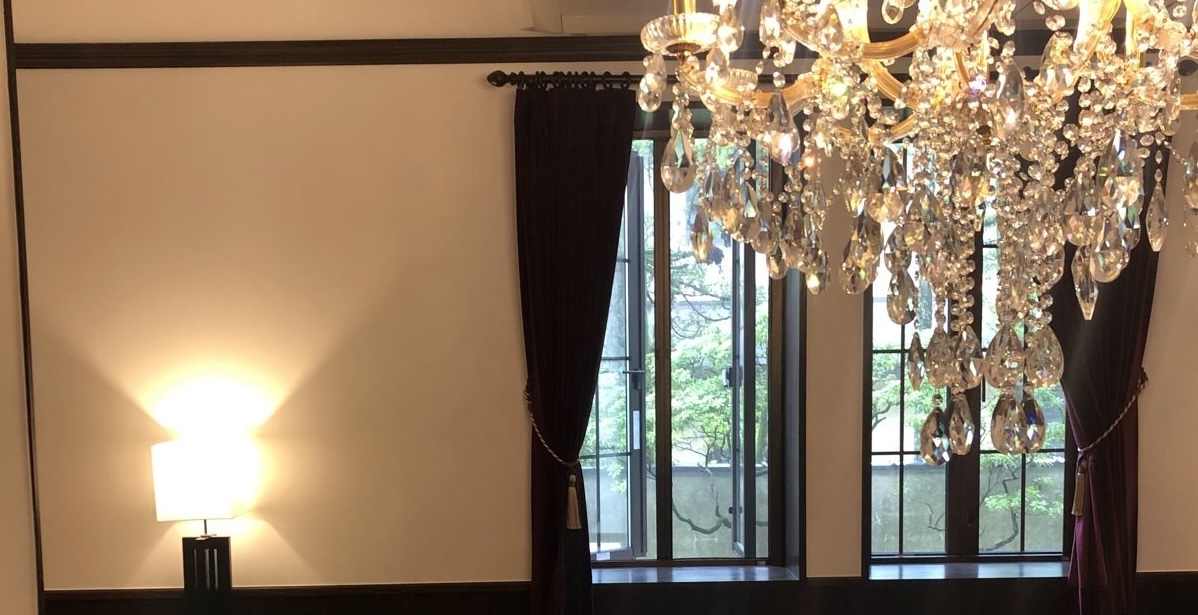
You enter through Kakumeikan, built in 1873. Its first floor was once a dance hall and is now the lounge. A chandelier hangs from the ceiling over red carpet and curved armchairs. I had come for a Japanese hot-spring inn, and for a moment it felt as though I had stepped back into an earlier century.
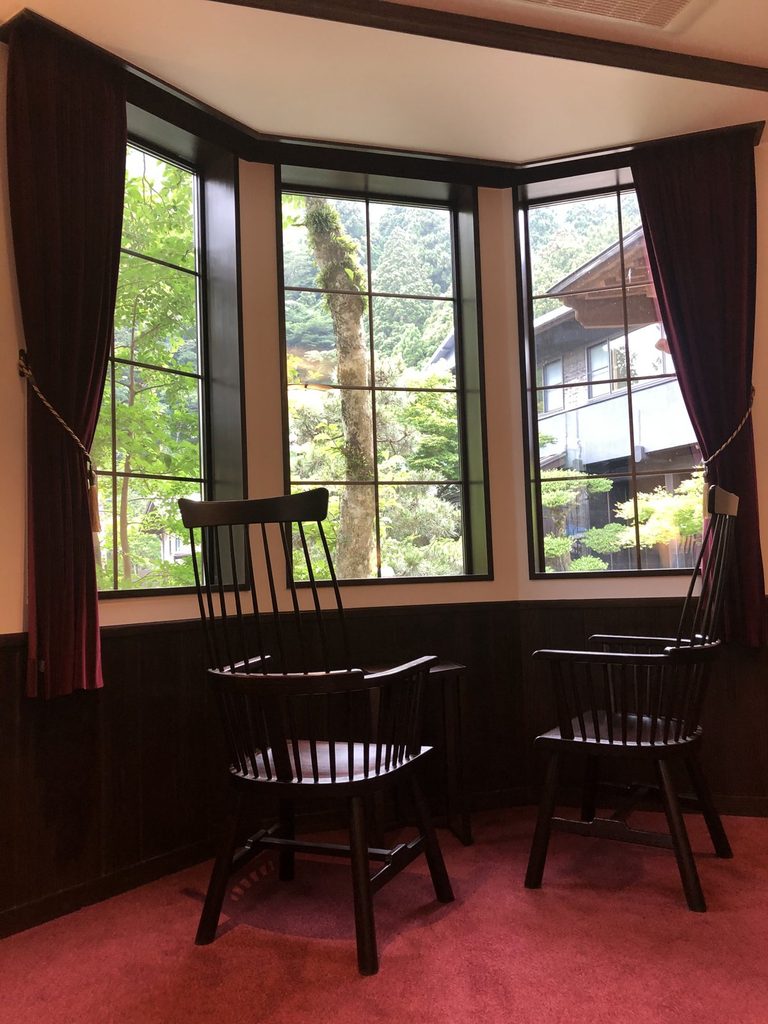
In one corner, two chairs face each other in a bay window. Outside, the deep green of the rainy season. It is a place to sit with someone, or alone with the view.
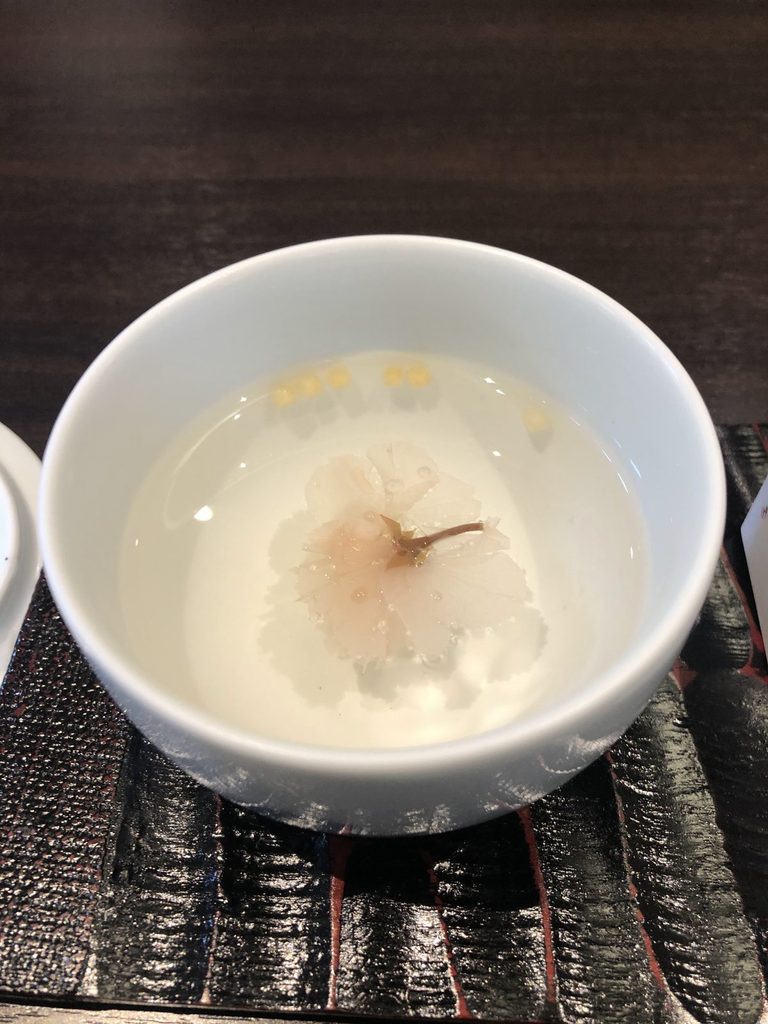
While I checked in, I was served sakurayu: a salted cherry blossom steeped in hot water. In the white cup, the petals slowly unfolded. The faint saltiness eased the long journey up the mountain. It felt like a small ritual to mark the start of the stay.
A room that faces the garden, and a sulfur spring
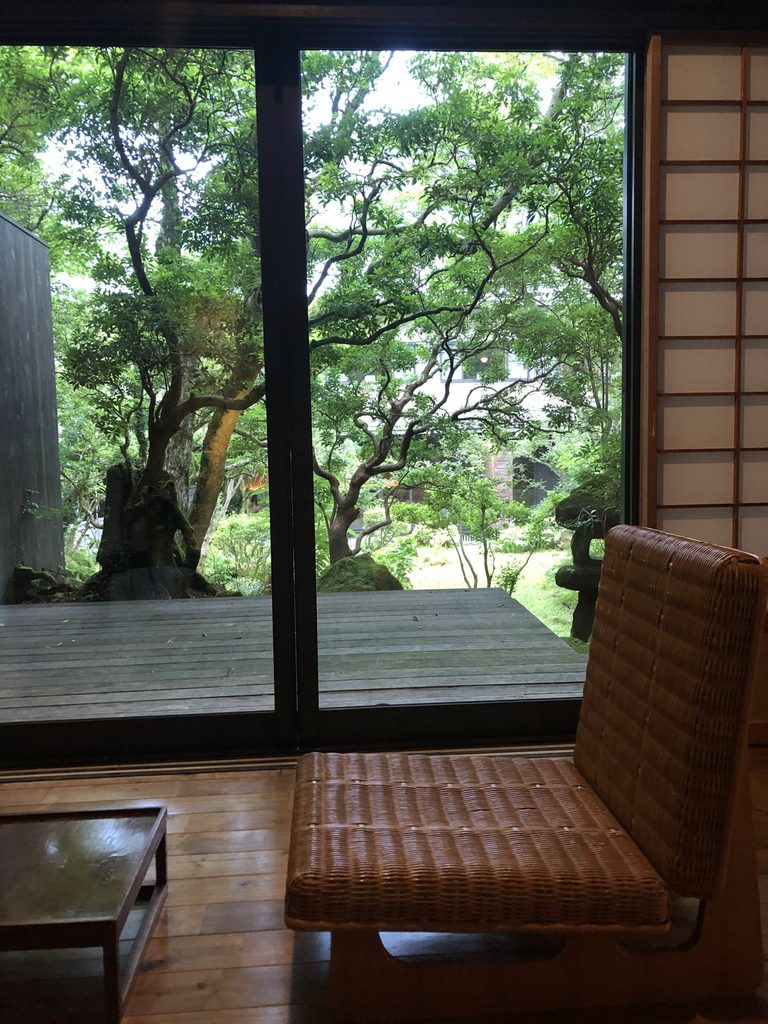
When I slid open the shoji, the garden was right there. Beyond a wooden veranda, old trees spread their branches wide. I sat in a rattan floor chair and simply looked out. I never once thought of turning on the television.
The other star of this inn is its water. It comes from the inn’s own source and flows straight into the baths, never heated, diluted, or recirculated. It is a sulfur spring, rare in Hakone, with fine white mineral flakes drifting in it. The water is said to look emerald when fresh and turn milky over time, so each bath looks a little different.
After bathing, my skin felt soft and the warmth stayed deep in my body. A faint smell of sulfur clung to my yukata sleeves. Oddly, it was comforting: proof that I was in the mountains.
Note: the main baths were fully renovated in March 2023, so they look different from when I stayed. There are also five private open-air baths you can book.
First time in an onsen? Wash and rinse at the shower stations before you get in, keep your towel out of the water, and take off any silver jewelry: sulfur water can tarnish it.
Shukuba kaiseki: tasting the season through its dishes
Dinner is shukuba kaiseki, a multi-course meal inspired by the hospitality Ashinoyu offered when it was a stop for travelers. The menu follows the old seasonal calendar and changes through the year.
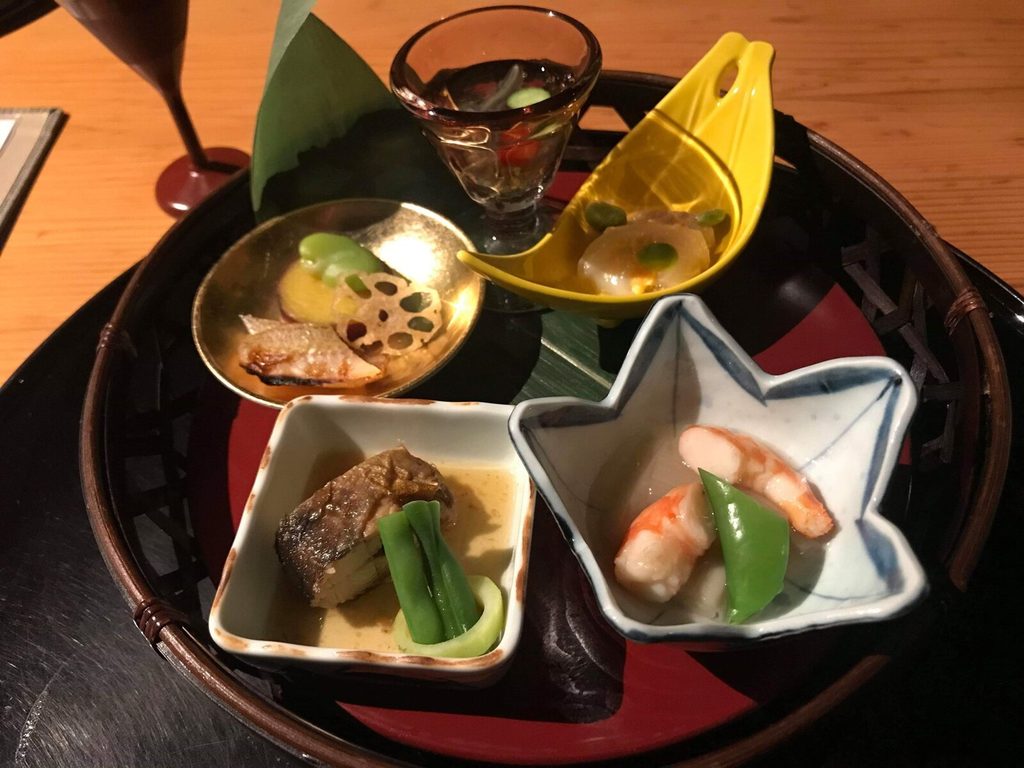
The meal opened with hassun, an assortment of small dishes gathered in a bamboo basket. On a gold-leaf plate: grilled fish, a crisp slice of lotus root, sweet potato, and fava beans. In a yellow boat-shaped dish: scallop with more fava beans. In an indigo maple-leaf bowl: shrimp and a snow pea. In a glass, a chilled savory gelée. I reached for each one as if opening a treasure box.
Gold, yellow, indigo, glass. Every dish had a different color and shape, yet together in the basket they made one picture. People say Japanese food is eaten first with the eyes. This was that idea made real.
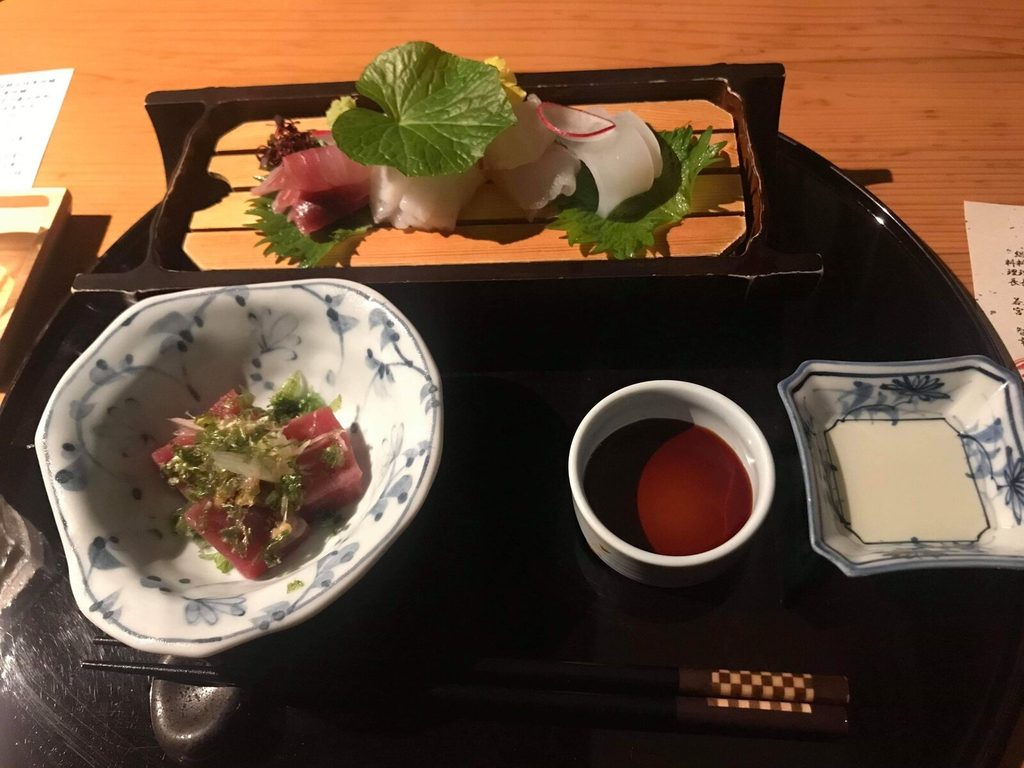
The sashimi followed: tuna, squid, and white fish, set with a broad wasabi leaf and shiso, like a small garden on a tray. A bowl of tuna dressed with green seaweed smelled of the sea. Hakone sits between Sagami Bay and Suruga Bay, so even on a mountain the seafood is close at hand.
A handwritten menu with the head chef’s name lay on the table. I read it between courses, checking the name of each seasonal dish. It was an unhurried evening.
Morning in the garden, and a traveler’s breakfast
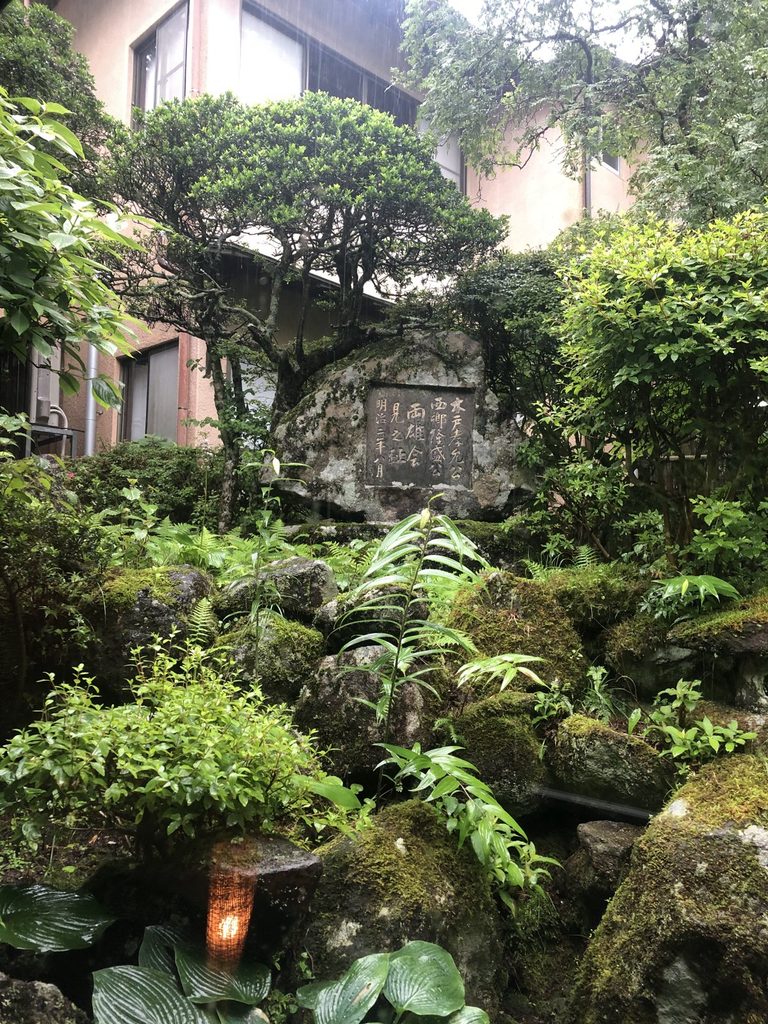
The next morning I walked in the garden before breakfast. In the rainy-season damp, the moss and ferns were a deep, soft green. An old stone monument stood at the back, and everything was still. Countless travelers must have looked at this same green.
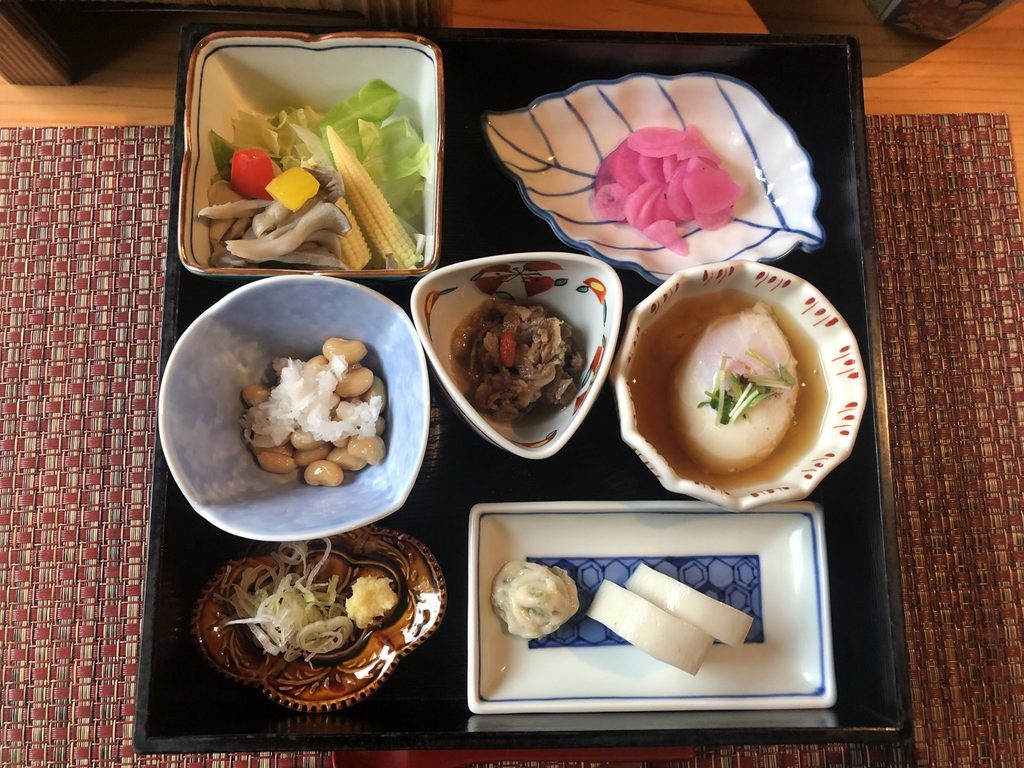
Breakfast is the tabibito (traveler’s) breakfast, inspired by the meals that sent people back on the road. Small dishes filled a black tray: soybeans with grated daikon, a mushroom salad, gently simmered vegetables, pickles. Everything was mild and quiet, the right food for a body warmed by the spring. Perhaps Edo travelers leaving Ashinoyu ate something like this before heading down the mountain.
Yoin: what a 360-year-old inn leaves behind
Matsuzakaya Honten is not a luxury ryokan that competes on new facilities. Its richness is of another kind: a Meiji parlor, a spring that has flowed since the Edo period, a garden tended by generation after generation. All of it seems to say there is no need to hurry.
On my way down the mountain, I noticed the faint smell of sulfur still in my hair. In Japanese there is a word for this: yoin, the resonance that stays after something has ended. If you come to Hakone, take the extra half hour up to Ashinoyu.
Practical information
| Address | 57 Ashinoyu, Hakone-machi, Ashigarashimo-gun, Kanagawa |
| Founded | 1662 |
| Getting there | From Tokyo, take the Odakyu Romancecar from Shinjuku to Hakone-Yumoto (about 90 min). Then a bus of about 25–30 min to the Higashi-Ashinoyu stop, a short walk from the inn |
| Onsen | The inn’s own sulfur spring, free-flowing and untreated |
| Baths | Separate men’s and women’s baths (renovated March 2023) and 5 bookable private open-air baths |
| Rooms | About 22, including detached villas, Japanese-Western rooms, and rooms with open-air baths |
| Meals | Dinner: shukuba kaiseki. Breakfast: traveler’s breakfast |
| Check-in / out | 3:00 p.m. / 11:00 a.m. |
| Phone | +81 460-83-6511 |
Details are based on information published in 2023. Drinks in the lounge are now included in the stay. Please check the official website for current rates and plans before booking.
Reserve your stay at Matsuzakaya Honten
The booking page opens in Japanese — simply select “English” from the language menu to view rooms and complete your reservation in English.