Suiden Terrasse: Sleeping Among the Rice Fields of Shonai
*This article contains affiliate links (PR).
In Tsuruoka, on the Shonai plain of Yamagata, a single hotel stands in the middle of the rice fields. This is SHONAI HOTEL SUIDEN TERRASSE. I stayed here in August 2025, at the end of summer, just before the harvest.
A building of wood and light
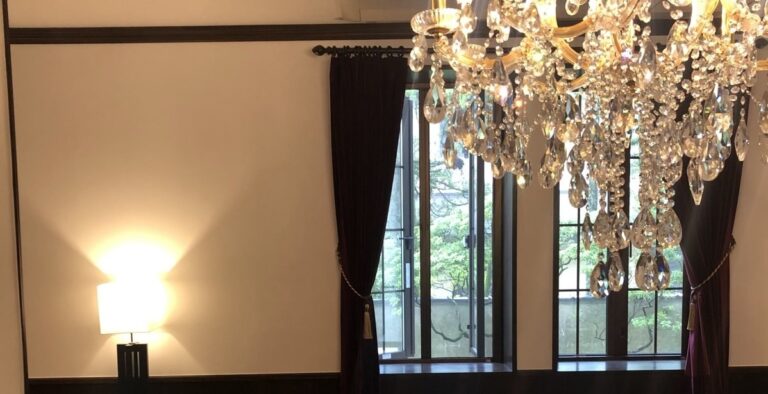
Take the lift up from the ground floor, step into the lobby, and the space opens up. The ceilings rise high, and light drifts softly down. The stiffness of a long journey begins to leave your shoulders.
Look up, look around, and there is wood. The warm tones of the timber, a faint scent of wood in the air. Run a hand along it, and it feels smooth and calm. Breathe in deeply, and even the air seems gentler here.
The building was designed by the architect Shigeru Ban, who received the Pritzker Architecture Prize — often called the Nobel Prize of architecture — in 2014. Built of wood, it stands close to the rice fields and quietly becomes one with the landscape beyond the windows.
A founder who fell for Shonai
Suiden Terrasse opened in 2018. It was created by Yamagata Design, a regional development company based in Tsuruoka. Its founder, Daisuke Yamanaka, grew up in Tokyo. He left a major real estate company, moved to Shonai, and founded Yamagata Design in 2014. It was the rural landscape of this region, he says, that captured his heart and set the whole project in motion.
Rice fields and dragonflies, seen from the bath
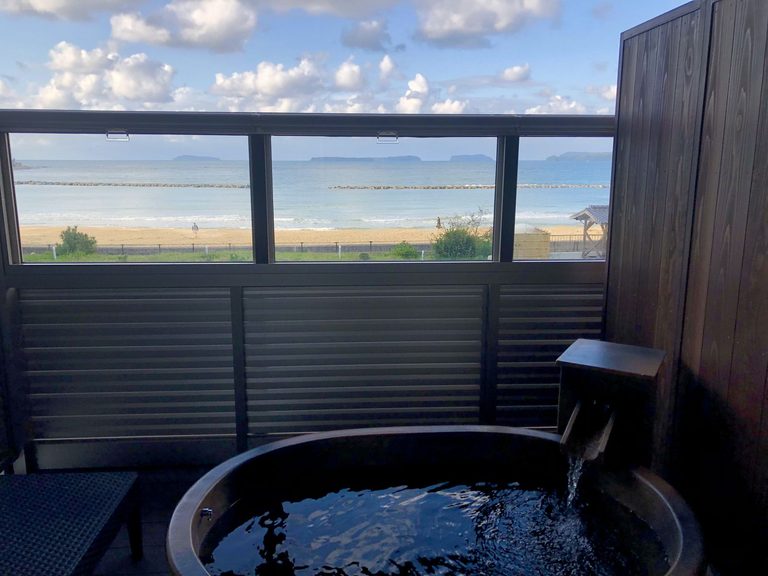
What stayed with me most was the time I spent in the bath. From the water, I could see the rice fields stretching beyond the window. Dragonflies drifted slowly above the rice. Time seemed to move more slowly than usual.
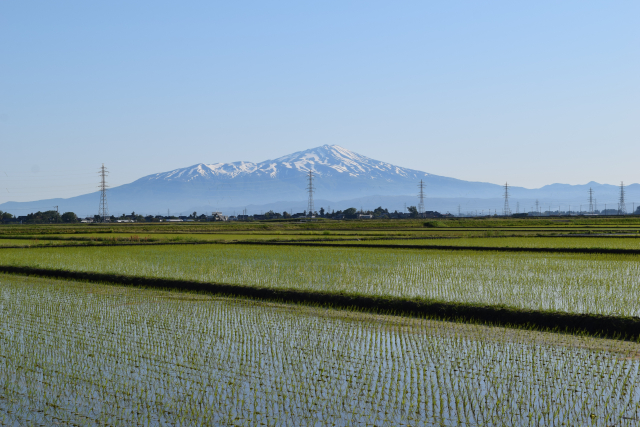
The rice changes with the seasons. Young seedlings stand in rows in early summer. By midsummer the fields are deep green, and in autumn they ripen to gold. Here, the growing of rice is not a backdrop — it is the view itself.
The Shonai Plain is one of Japan’s great rice-growing regions. It is also known as the birthplace of Kame-no-o, an heirloom rice variety regarded as a root of some of Japan’s best-loved rice, including Koshihikari, Sasanishiki and Tsuyahime. The fields beyond the window are, in a sense, a living history of the rice that has fed Japan for generations.
Breakfast from the land of Shonai
Suiden Terrasse is well known for its breakfast. Fresh local ingredients from Shonai fill the table, changing with the seasons. On the terrace, with Mount Gassan rising beyond the rice fields, you can take your time and savour the flavours of the region.
The room: two floors
I stayed in a room set over two floors. You enter on the upper floor, where the living space is. The bedroom is downstairs. It is not large, but it was all I needed.
There are also single-level rooms. For a short stay or for a solo traveller, one of these would be more than enough.
Who it is for, and when to go
I would recommend Suiden Terrasse to anyone who wants to quietly take in the atmosphere of rural Japan. The best time, in my view, is August or September, before the rice is harvested. The fields are at their fullest, and you have a good chance of seeing dragonflies. I haven’t stayed in July myself, but I imagine it is lovely too: the rice stands lush and green, and on clear days a pleasant breeze moves across the fields.
Practical notes
- Plan to stay the night: It is too far from Tokyo for a comfortable day trip.
- A car helps: The hotel is surrounded by fields, and public transport is limited. If you can drive in Japan, rent a car. If not, plan on longer taxi rides.
- Getting there: About 20 minutes by rental car or taxi from Shonai Airport, or about 10 minutes from Tsuruoka Station.
- Best season: July to September, before the harvest
Reserve your stay at Suiden Terrace
The booking page opens in Japanese — simply select “English” from the language menu to view rooms and complete your reservation in English.